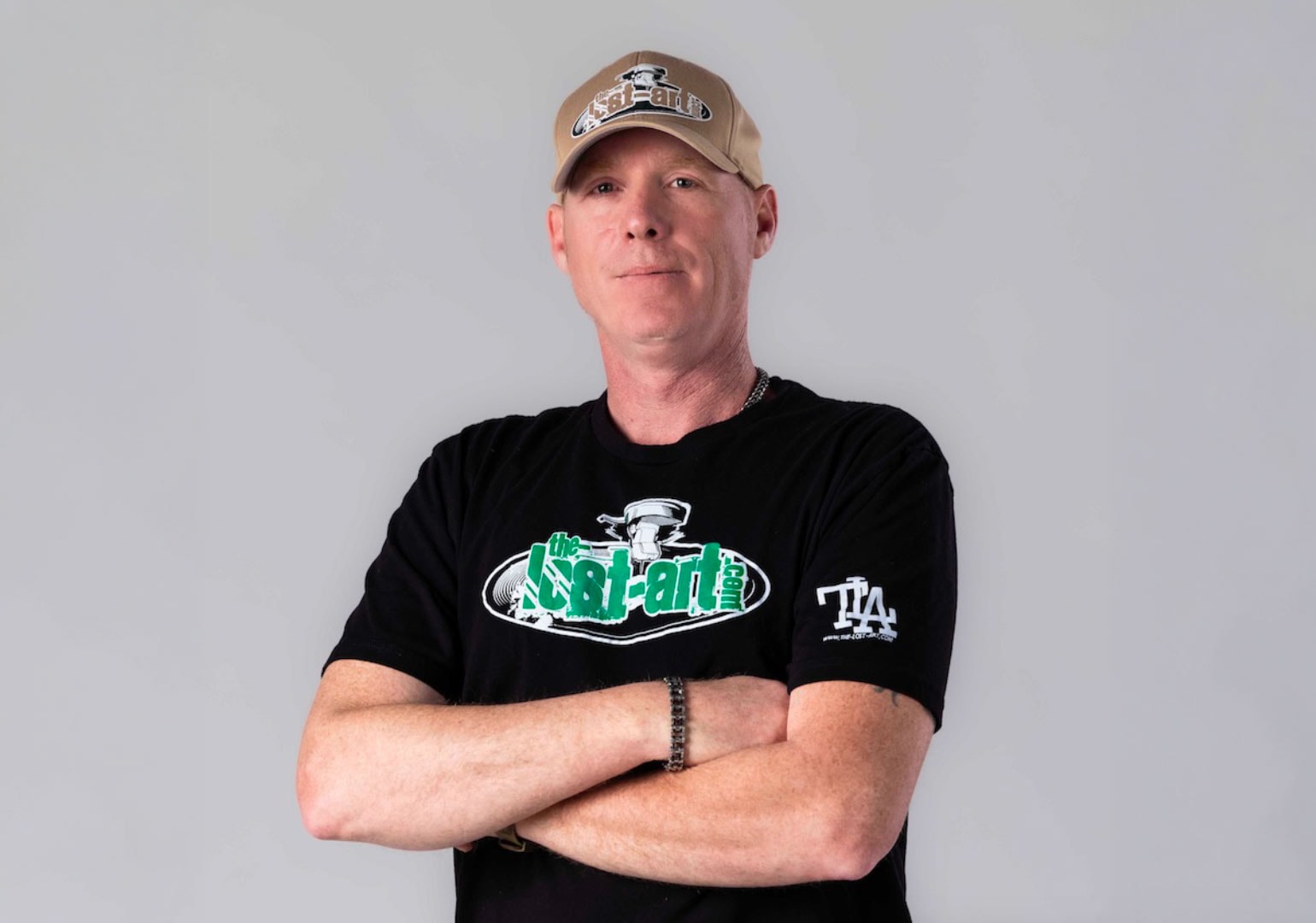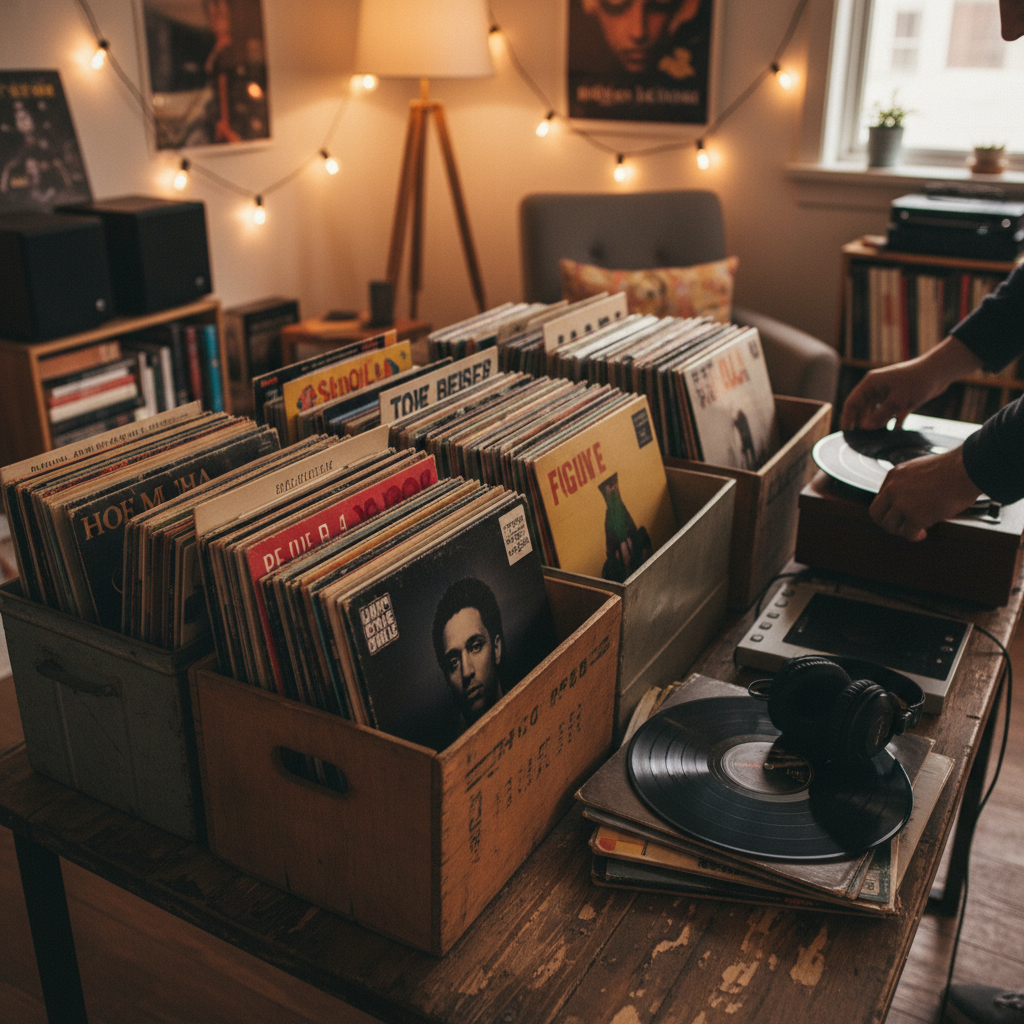
A DJ record collection is a working tool, not a display. Building one requires a different approach than general record collecting, you are selecting for playability, for versatility, for the specific needs of the sets you play. DJ Natural Nate® has been building and playing from a vinyl collection for over 30 years. Here is everything he knows about how to do it right.
The Difference Between Collecting Records and Building a DJ Collection
Record collecting and building a DJ collection are related activities but they are not the same thing. A record collector acquires records for their historical significance, their rarity, their condition, or their personal meaning. A DJ builds a collection for a specific purpose, to play. Every record in a DJ collection has to earn its place by being useful in a set. That means it has to be playable: the right tempo range, the right key, the right energy level, the right length. It has to be versatile, useful in multiple contexts, not just one specific moment. And it has to be durable, able to withstand the physical demands of being played on turntables repeatedly, sometimes in less than ideal conditions. These requirements shape every decision in building a DJ collection, from what genres to focus on to what condition to accept when buying used records to how to organize the collection for fast access during a set.
Every record in a DJ collection has to earn its place by being useful in a set. If you cannot play it, it does not belong in the crate.
Starting Point: Define Your Sound Before You Buy
The most common mistake new DJs make when building a record collection is buying records before they have defined their sound. They go to a record store or a record fair and buy whatever catches their attention: a little house, a little techno, a little hip-hop, a little drum and bass, and end up with a collection that is too scattered to build coherent sets from. Before you spend money on records, spend time listening. Figure out what genres you want to play, what BPM ranges feel natural to you, what energy level you want to maintain in your sets. Then start buying with that focus in mind. A focused collection of 200 records in one or two genres is more useful to a DJ than a scattered collection of 500 records across ten genres. You can always expand later. Start focused.
Where to Find Records: Sources for Every Budget
Record stores are the obvious starting point, but they are not the only source and often not the best value. Used record stores and thrift stores are where the real finds happen, records that were donated or sold by people who did not know what they had, priced at a fraction of what they are worth to a DJ who knows how to use them. Record fairs and swap meets are another excellent source, particularly for older genres where the original pressings are no longer in print. Online marketplaces, Discogs is the most comprehensive, allow you to search for specific records and compare prices across sellers worldwide. The white label market, records pressed in small quantities for DJs and not commercially released, is where the most exclusive material lives, but it requires connections in the DJ community to access. DJ Natural Nate's Dub Plug White Label Series is an example of this category, records that were pressed for specific events and are not available through any commercial channel.
What to Look For: Condition, Pressing, and Playability
Condition matters more for DJ records than for collector records because DJ records get played. A record with surface noise that a collector might accept as "VG+" is a record that will sound bad through a PA system in a club. When buying used records for DJ use, grade conservatively, what a seller calls VG+ may be VG or even lower by DJ standards. Play the record before you buy it if possible. Check for warps, which will cause the needle to skip. Check for deep scratches, which will cause the needle to skip. Check for pressing defects, bubbles, off-center pressings, thin vinyl, which will affect playability. The pressing matters too. Original pressings of classic records are often better quality than reissues: the vinyl is heavier, the mastering is better, and the sound is fuller. For DJ use, a well-pressed reissue is usually preferable to a worn original, but a well-pressed original is the best of all.
Organization: How to Structure Your Collection for Fast Access
A DJ collection that is not organized is a collection that cannot be used effectively. The organization system you use should be designed for one purpose: finding the right record quickly during a set. The most common system is alphabetical by artist within genre sections, all the house records together, alphabetical by artist; all the breakbeat records together, alphabetical by artist. Some DJs organize by BPM within genre, which makes it easier to find records that will mix smoothly with whatever is currently playing. Some DJs use a color-coding system, colored stickers on the spine to indicate BPM range, energy level, or key, that allows for fast visual scanning. Whatever system you use, use it consistently. A partially organized collection is worse than an unorganized one because it creates false confidence, you think you know where something is, and you are wrong.
A DJ collection that is not organized is a collection that cannot be used effectively. The organization system exists for one purpose: finding the right record quickly.
Maintenance: Keeping Your Collection Playable
Records require maintenance. Dust is the enemy, it accumulates in the grooves and causes surface noise and wear. A good record cleaning routine is essential: a carbon fiber brush before every play to remove surface dust, and a wet cleaning process for any record that has significant dirt or grime. Record sleeves matter, inner sleeves should be anti-static polyethylene, not the paper sleeves that most records come with, which shed particles into the grooves. Outer sleeves protect the jacket and keep the record clean during storage. Storage position matters, records should be stored vertically, not stacked horizontally, to prevent warping. Temperature and humidity matter, extreme heat or cold, and high humidity, will damage records over time. A DJ collection that is properly maintained will last decades. A collection that is neglected will deteriorate quickly, and the records that deteriorate are often the ones that cannot be replaced.
The Long Game: Building a Collection Over Years
A DJ collection is not built in a month or a year. It is built over years, through consistent acquisition, careful curation, and the gradual development of taste and knowledge that comes from playing the records and understanding what works and what does not. DJ Natural Nate® has been building his collection for over 30 years, and the collection he plays from today reflects three decades of decisions about what to keep, what to let go, and what to seek out. The records that have stayed in the collection are the ones that have proven their value over time: the records that work in set after set, in venue after venue, for audience after audience. The records that have left the collection are the ones that seemed important at the time but turned out to be less versatile or less durable than they appeared. Building a DJ collection is a long game. Play the long game.