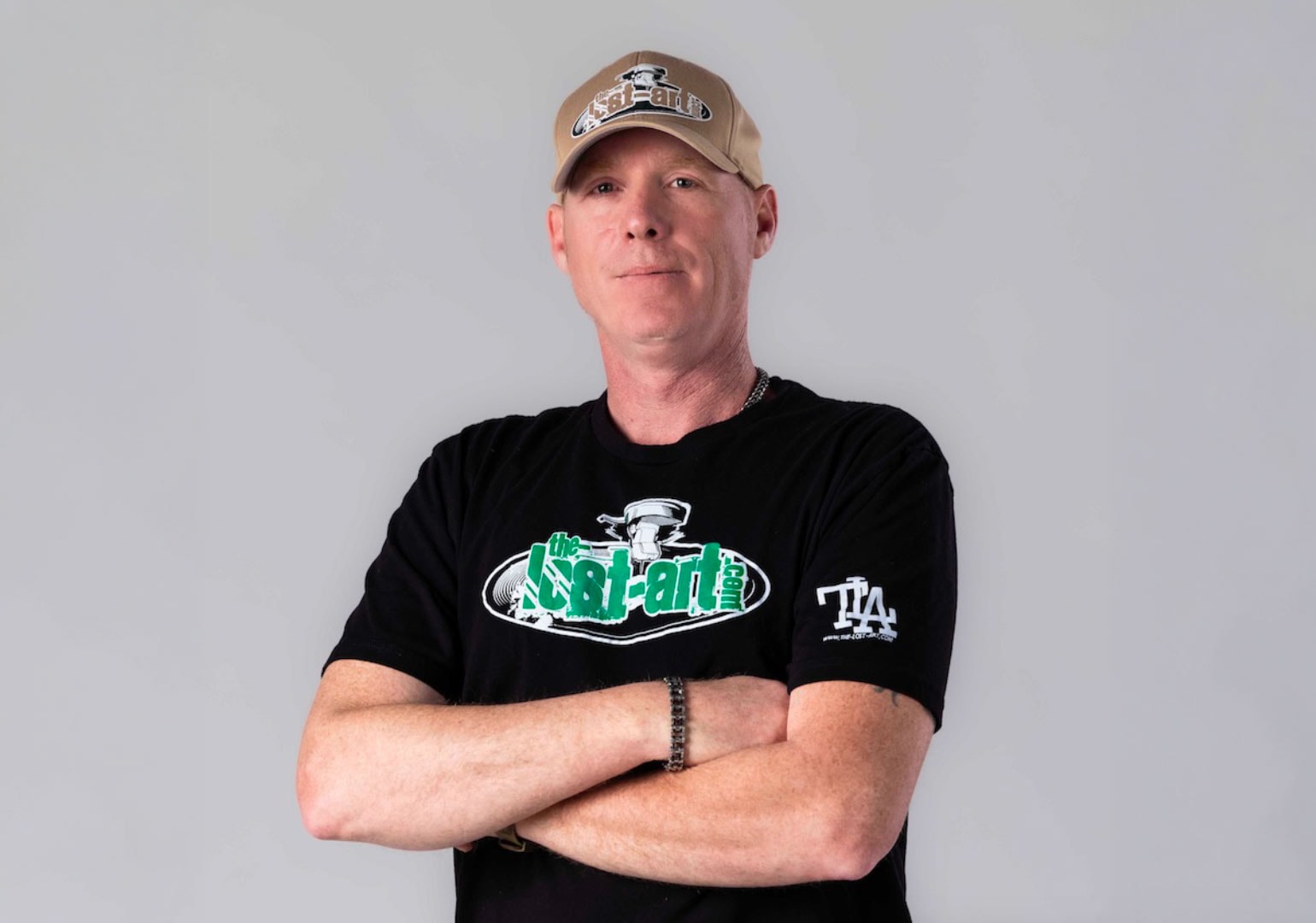
The sync button made beatmatching optional. DJ Natural Nate®, who mixed 86 tracks in one hour manually on vinyl at 133 BPM, argues that making it optional was the worst thing that ever happened to DJ culture, and explains why the skill still defines what real DJing is.
What Manual Beatmatching Actually Is
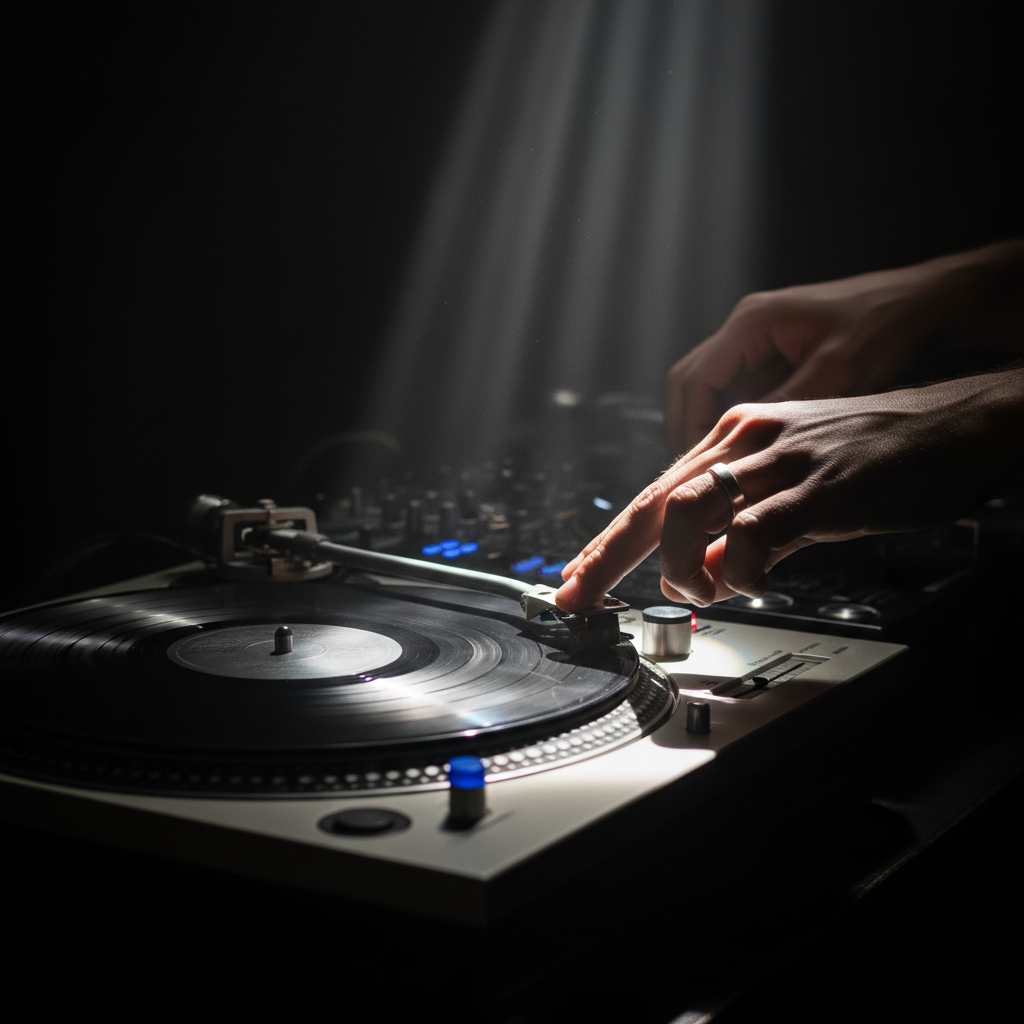
The pitch fader on a Technics SL-1200 adjusts the playback speed of the record by a percentage, typically plus or minus eight percent. The DJ uses this fader to bring the tempo of the incoming track into alignment with the outgoing track, listening for phase drift: the gradual slipping of one beat against another, and correcting it in real time. The ear is doing something remarkably sophisticated: detecting tiny differences in tempo, identifying the phase relationship between two rhythmic patterns, and triggering a physical correction before the drift becomes audible to the audience. This is not a skill that can be learned in an afternoon. It takes months to develop a reliable ear and years to develop the instinctive, automatic correction that defines a truly skilled manual beatmatcher. The process is both intellectual and physical: the mind identifies the problem and the hand corrects it, but at the highest level of skill, the correction happens before the conscious mind has time to process the information. The body learns to hear.
Why It's Disappearing
The sync button, introduced in Serato and Traktor and now standard on virtually every DJ controller, performs the beatmatching automatically. Press sync, and the software aligns the tempos and phases of two tracks instantly. The practical result is that a DJ can learn to mix in a weekend without ever developing the ear that manual beatmatching requires. This has democratized DJing in one sense, more people can do it, while simultaneously removing the skill barrier that once guaranteed a minimum level of craft. The cultural shift is real and significant. A generation of DJs has grown up never needing to develop the ear, and many of them don't know what they're missing. They have never experienced the satisfaction of locking two records together manually, of hearing the beats snap into phase through the headphones, of knowing that the mix is holding because of something they built inside themselves over years of practice. That experience is disappearing, and with it goes something essential about what DJing is.
The Physical and Mental Skill Required
The muscle memory required for manual beatmatching is substantial. The pitch fader must be moved in tiny increments, often fractions of a millimeter, to correct drift without overcorrecting. The hand learns to make these adjustments automatically, without conscious thought, while the DJ's attention is simultaneously on track selection, EQ management, crowd reading, and the overall arc of the set. At high tempos: 130 BPM and above: the beats are arriving approximately twice per second. The DJ's ear must detect drift at that speed and correct it before it becomes audible. This is a physical and mental skill that takes years to develop. The concentration required to maintain a manual mix at high tempo for an extended period is genuinely demanding: the kind of focused attention that athletes describe as being in the zone. It is not passive. It is active, continuous, and exhausting in the best possible way.
Holding a mix at 133 BPM manually for an hour requires a level of concentration that most people have never experienced.
How DJ Natural Nate® Learned to Beatmatch on Vinyl
No sync, no BPM counter, no digital assistance. DJ Natural Nate® learned to beatmatch the way every DJ learned before digital tools existed, by listening, making mistakes, correcting them, and repeating the process thousands of times. The Marine Corps discipline he developed during his service shaped his approach to practice: repetition until the skill becomes automatic, no shortcuts, no excuses. He describes the process of learning to beatmatch as one of the most demanding things he has ever done, and one of the most rewarding. The ear that he developed through that process is the foundation of everything else he has accomplished as a DJ. Without that ear, the world record would not have been possible. Without that ear, the original scratch techniques would have had no rhythmic foundation to build on. The ear is not a secondary skill, it is the primary skill, the one that everything else depends on. Building it on vinyl, without assistance, is the only way to build it properly.
The World Record: 86 Tracks in One Hour at 133 BPM
On April 29, 2010, DJ Natural Nate® set a world record by performing 86 live vinyl mixes within a single hour at 133 BPM. The record was verified by RecordSetter and covered by Denver Westword. The mathematics are stark: 86 tracks in 60 minutes means completing a mix approximately every 42 seconds. At 133 BPM. Manually. On vinyl. Each mix required the DJ to cue the next track, bring it to tempo, find the phrase, and execute the transition, all within 42 seconds, while maintaining the energy and flow of the set. This is what manual beatmatching looks like at its absolute limit. The record is not a demonstration of speed for its own sake, it is a demonstration of what the skill looks like when it has been developed to the point where it becomes automatic. The ear and the hand working together, without hesitation, without error, for sixty consecutive minutes.
86 tracks. 60 minutes. 133 BPM. No sync. No digital assistance. Just vinyl and an ear built over decades.
Why Sync Buttons Changed Everything (And Not for the Better)
The sync button is not evil. It is a tool, and tools are neutral. But the cultural impact of making beatmatching optional has been significant and largely negative for the craft. When beatmatching was required, the DJ community had a natural filter, DJs who couldn't develop the ear eventually stopped. The ones who survived had a foundational skill that everything else was built on. When beatmatching became optional, that filter disappeared. The result is a DJ landscape where the technical floor has dropped significantly, and where many performers who call themselves DJs have never developed the most fundamental skill the craft requires. The sync button has also changed the relationship between the DJ and the music. When the software is doing the beatmatching, the DJ's attention is freed from the most demanding cognitive task in the performance. That freed attention often goes toward visual presentation, social media, or crowd interaction, not toward deeper musical engagement.
How to Develop the Ear
Start with two copies of the same record, this removes the variable of tempo difference and lets you focus purely on phase alignment. Practice bringing them into phase, then letting one drift and correcting it. Gradually introduce tempo differences. Use a metronome to train your internal sense of tempo. Listen to music analytically, not just for enjoyment, but for the rhythmic structure. Count the beats. Identify the phrases. Notice where the breaks fall and where the energy shifts. The ear develops through active listening, not passive consumption. Every hour you spend listening analytically is an hour of practice, even when you're not behind the decks. The DJ who listens to music the way a musician listens, with attention to structure, rhythm, and relationship, is building the ear that manual beatmatching requires. The process is slow and the progress is not always visible. But the ear that emerges from that process is something that cannot be taken away.
The Case for Preserving the Pitch
The philosophy behind The-Lost-Art.com™'s motto is not nostalgia for a simpler time. It is a commitment to the standard that makes the craft worth having. Manual beatmatching is worth preserving not because it is old, but because it is genuinely difficult, and the difficulty is what makes the achievement meaningful. A DJ who can beatmatch manually has developed something that cannot be purchased or downloaded. That skill is worth protecting. The-Lost-Art.com™ was built on the principle that authentic DJ performance, visible, manual, demonstrably skilled, deserves a platform and an audience. That principle is as relevant in 2026 as it was when the platform launched in 2009. The pitch is worth preserving. The skill is worth developing. The standard is worth maintaining. Not because the past was better, but because the craft is worth having at its full depth.
Preserving the pitch is not nostalgia. It is a commitment to the standard that makes the craft worth having.