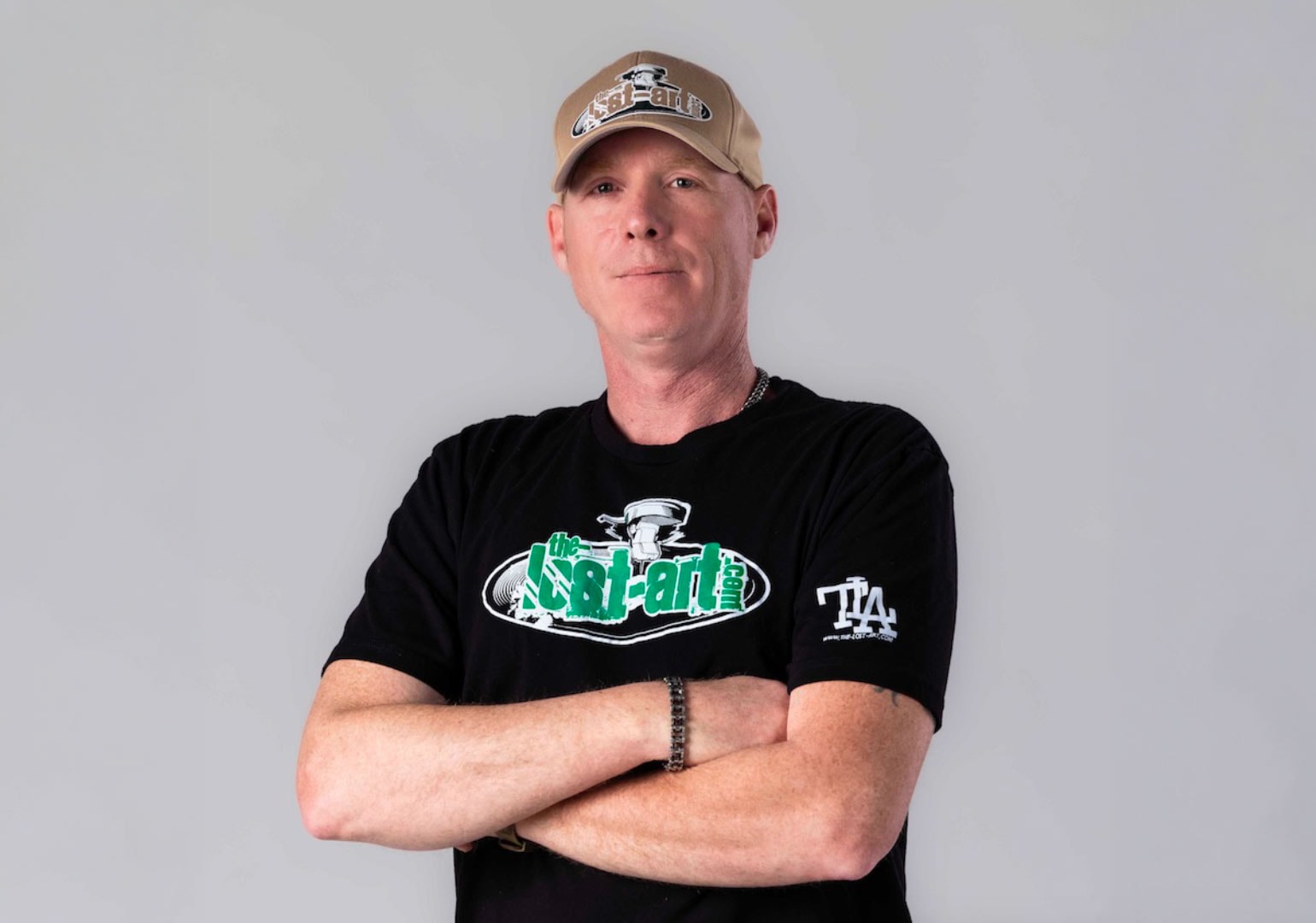
I have been DJing for over two decades and have built a massive vinyl record collection over the years. Like every serious vinyl DJ, I have heard every debate imaginable about the correct way to clean records. After thousands of hours behind the turntables, I decided to stop listening to everyone else and start paying attention to what actually worked. What I landed on will make every vinyl purist lose their mind, and it works better than anything else I have ever tried.
Every DJ Has an Opinion. Here Is Mine.
I have been DJing for over two decades and have built a massive vinyl record collection over the years. Like every serious vinyl DJ, I have heard every debate imaginable about the "correct" way to clean records. Everyone has an opinion, everyone has a different method, and everyone claims theirs is the best. After thousands of hours behind the turntables, I decided to stop listening to everyone else and start paying attention to what actually worked for my own collection.
I've tried just about everything. I tried plain water because many collectors recommended it. While distilled water certainly has its place, I personally found that water alone left my records feeling dry and did very little to reduce static electricity. It also takes time to dry properly, and if you're not careful, it can damage or wrinkle the paper center labels. When you're constantly taking records to clubs, radio shows, festivals, and gigs, waiting for records to dry simply isn't practical.
What I Tried: And Why I Stopped
Like many DJs, I also experimented with rubbing alcohol. Looking back, I consider that one of the biggest mistakes I made. Pure or highly concentrated rubbing alcohol can damage vinyl records over time. Research and preservation discussions have shown that repeated exposure can strip away surface lubricants, dry out the vinyl, and gradually leach the plasticizers that help keep the PVC flexible. As those compounds are reduced, the record can become more brittle, build up more static electricity, attract more dust, and develop increased surface noise. While some collectors still use heavily diluted isopropyl alcohol on modern PVC records, I personally stopped using alcohol completely after seeing what I believed were negative long-term effects on my own collection. My records simply didn't age as well. They felt drier, attracted more dust, generated more static, and produced more pops and crackles than before.
I also tried using Windex after hearing recommendations from other DJs. That experiment didn't last long either. Ammonia-based cleaners were designed for cleaning glass and household surfaces, not microscopic vinyl grooves that contain your music. I personally wasn't comfortable exposing thousands of dollars worth of records to harsh household chemicals that were never intended for vinyl preservation.
Then came Groove Glide. To be completely honest, this was probably my biggest disappointment. I had high hopes because it was marketed specifically for records, but after repeated use I began noticing some of my records developing a cloudy white appearance. They started looking dull, almost like a coating was building up on the surface. Whether it was residue or simply how the product interacted with my records, I didn't like what I was seeing. Eventually I stopped using it altogether.
"Looking back, I consider rubbing alcohol one of the biggest mistakes I made. My records simply didn't age as well.", DJ Natural Nate®
The Craziest Idea I Ever Had
That experience actually led to one of the craziest ideas I've ever had. One day I started thinking about why Groove Glide seemed to leave buildup behind. I asked myself, if a product designed specifically for records can leave residue, what would happen if I tried something completely different? That's when my eyes landed on a can of Lemon Pledge sitting nearby. Yes... furniture polish. It sounds completely ridiculous, and honestly, I thought it was ridiculous too.
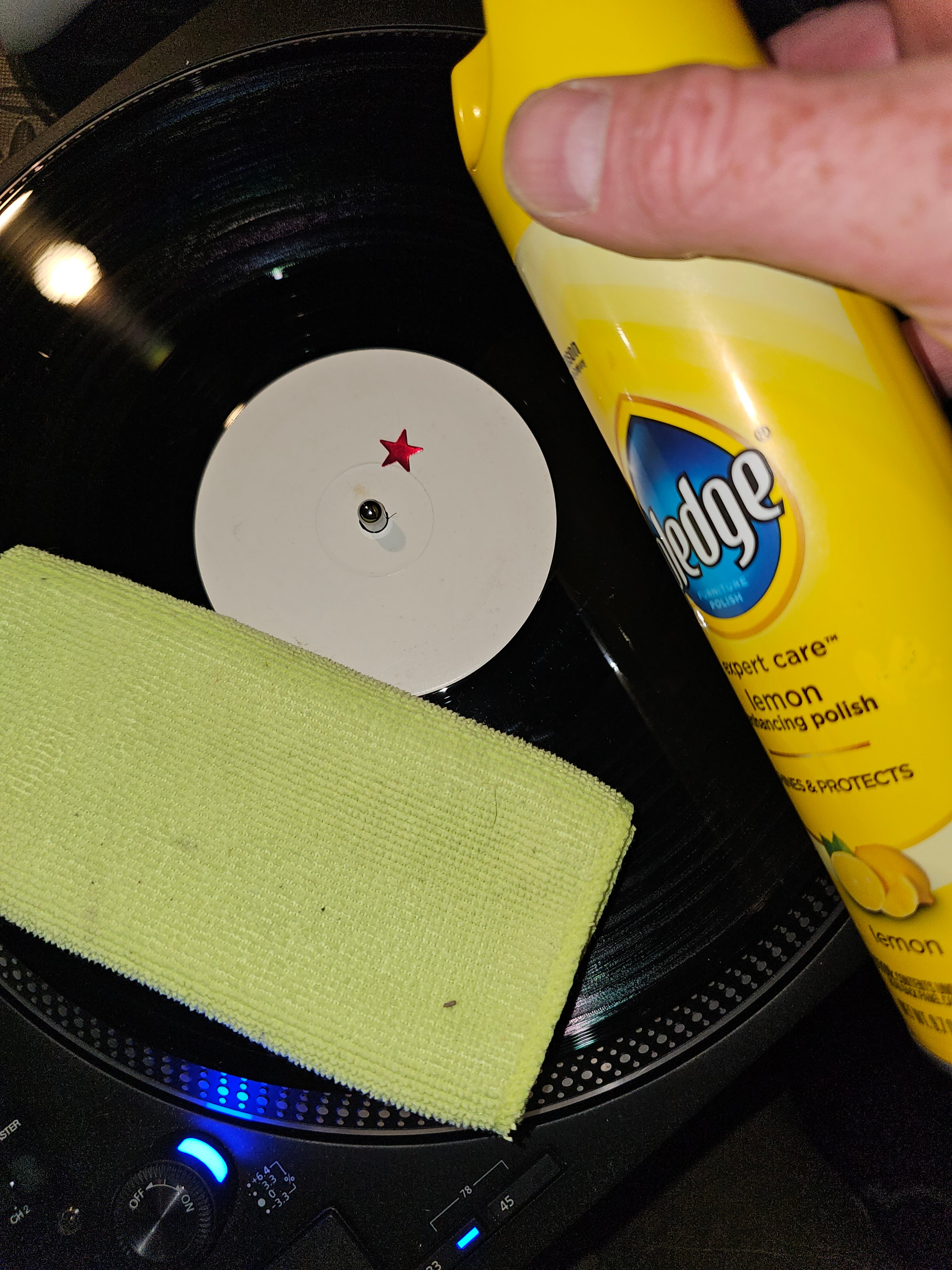
The method in action, Lemon Pledge, a clean microfiber cloth, and a white label on the platter. Spray the cloth, never the record. Wipe with the grooves. Buff immediately dry.
The idea wasn't as crazy as it first sounds. My thought process was simple. Pledge is designed to remove fingerprints, body oils, dust, and contaminants while leaving smooth surfaces looking clean instead of dried out. I wondered if an extremely light application could remove oils from handling records while also reducing the static electricity that constantly attracts dust into the grooves.
Static electricity is a very real problem with vinyl records. Records can develop static charges from handling, friction with sleeves, dry air, and normal playback. That static acts like a magnet, pulling airborne dust directly into the grooves. Every tiny particle the stylus encounters has the potential to become another pop, click, or crackle during playback. In my own testing over many years, I consistently found that reducing static meant cleaner records, less dust accumulation, and quieter playback. Whether you describe it as balancing electrical charges or reducing static buildup, the end result for me was obvious: less dust sticking to my records.
The Exact Method: Step by Step
So I developed a method that I've now used for well over a decade. I take a clean microfiber cloth and fold it several times. I lightly spray one side of the cloth with Lemon Pledge. I never spray directly onto the record. I place the record on the turntable and rotate it quickly by hand while gently wiping in the direction of the grooves. Immediately afterward, before the product has any opportunity to dry, I flip the cloth over and buff the record completely dry using the clean side of the microfiber towel. The entire process only takes a few seconds.
People always ask the same question: "Doesn't it leave wax all over the record?" In my experience, absolutely not. Because I'm applying such a tiny amount and immediately buffing it completely dry, I've never experienced wax buildup or residue. In fact, after using this exact process for well over ten years, I have never once had to clean my stylus because of Pledge residue. If there were significant buildup, my needles would have shown it long ago.
What I have noticed is that my records stay noticeably cleaner between plays. Fingerprints wipe away easier. Surface dust doesn't seem to cling as aggressively. Static is dramatically reduced compared to many other cleaning methods I've tried. The records also don't feel dried out the way they did after repeated alcohol cleaning. While I can't claim this restores damaged records or repairs worn grooves, I can honestly say that my collection has held up remarkably well after years of heavy DJ use, constant transportation, scratching, cueing, and live performances.
"After well over ten years using this method, I have never once had to clean my stylus because of Pledge residue. If there were significant buildup, my needles would have shown it long ago.", DJ Natural Nate®
They Laughed. Then They Tried It.
For years I kept this method mostly to myself. I only shared it with a handful of close DJ friends because I knew how crazy it sounded. Every single one of them laughed the first time I told them. Then they tried it. Today, many of those same DJs carry a microfiber cloth and a can of Lemon Pledge in their record bags. Every time I see them pull it out before a set, I can't help but smile because they once thought I was completely out of my mind.
Would I tell everyone this is the only way to clean records? No. Ultrasonic cleaning machines are probably the gold standard for deep cleaning, but they're expensive, they're not portable, and you certainly aren't taking one to a nightclub or festival. My method isn't about replacing professional archival cleaning. It's about finding something inexpensive, portable, incredibly fast, and consistently effective for working DJs who use their records every week.
After more than twenty-five years behind the turntables and well over a decade using this cleaning method on my own collection, I can honestly say it has become my favorite way to maintain my vinyl. Sometimes the best discoveries don't come from expensive specialty products. Sometimes they come from asking a simple question that nobody else was willing to ask.
This is Tip #1. There are more where this came from. Stay tuned.
"Sometimes the best discoveries don't come from expensive specialty products. Sometimes they come from asking a simple question that nobody else was willing to ask.", DJ Natural Nate®