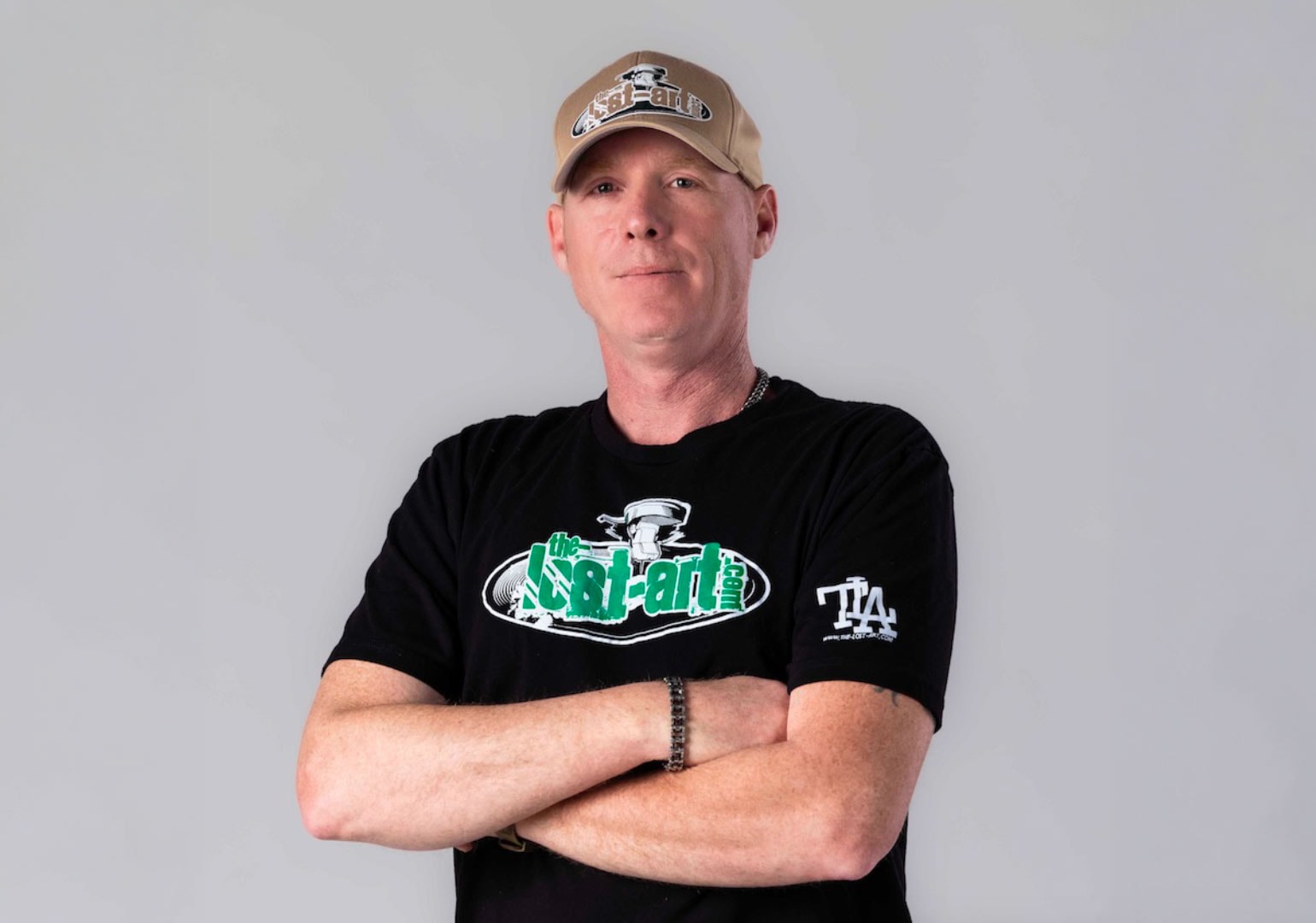
After more than two decades of DJing, collecting vinyl, traveling with records, buying collections, and receiving countless shipments through the mail, I have seen just about every type of record warp imaginable. One of the biggest myths I hear is that once a record is warped, it automatically belongs in the trash. That is simply not always true. I have personally brought many warped records back to a very playable condition using nothing more than patience, experience, and careful hand manipulation. Here is exactly how I do it.
The Myth That Costs Collectors a Fortune
After more than two decades of DJing, collecting vinyl, traveling with records, buying collections, and receiving countless shipments through the mail, I have seen just about every type of record warp imaginable. One of the biggest myths I hear is that once a record is warped, it automatically belongs in the trash. That is simply not always true. While there are definitely records that are beyond saving, I have personally brought many warped records back to a very playable condition using nothing more than patience, experience, and careful hand manipulation.
I will also be honest. I have broken a few records learning this technique over the years. Like anything else, there is risk involved. If you are going to try it, understand that you are doing so at your own risk. This is not a guarantee. It is a method that has worked for me repeatedly on the right type of warp, and understanding which type of warp you are dealing with is the most important thing you can know before you touch the record.
Not All Warps Are the Same: Know What You Are Dealing With
The very first thing you have to understand is that not all record warps are the same. Many people lump every warped record into one category, but there are actually several different types of warps. One that I commonly run into is what I call the "Spinning Top" warp. This is the type where you place the record on the turntable and it behaves differently depending on which side is facing up. Flip it one way and it may play almost perfectly with very little movement. Flip it over and suddenly the record begins rocking like a spinning top, bouncing the cartridge violently enough to throw the stylus completely out of the groove. This is usually a physical bend in the vinyl itself rather than damage caused by excessive heat.
A true heat warp is an entirely different animal. If a record has been left inside a hot vehicle, stored next to a heater, exposed to direct sunlight for long periods, or literally began melting, the vinyl's molecular structure has changed. Those types of warps generally require controlled heat and specialized flattening equipment, and even then there is no guarantee of success. Once the grooves themselves have become distorted from heat, no amount of bending by hand is going to restore the original groove geometry.
"Flip it one way and it plays almost perfectly. Flip it over and suddenly it rocks like a spinning top, bouncing the cartridge violently enough to throw the stylus completely out of the groove.", DJ Natural Nate®
The Shipment That Sank My Heart
I recently received a shipment of records where two albums arrived with severe spinning top style warps. My heart absolutely sank. Anyone who collects vinyl knows that feeling. You wait for a package, carefully open it, and immediately notice the record rocking across the platter instead of laying flat. My first thought was that something heavy had probably been stacked on top of the shipping box during transportation. Shipping companies move thousands of packages every day, and a box containing records can easily end up underneath much heavier freight. Pressure over time can slowly introduce a bend into the vinyl, especially if the package was exposed to warm temperatures during shipping.
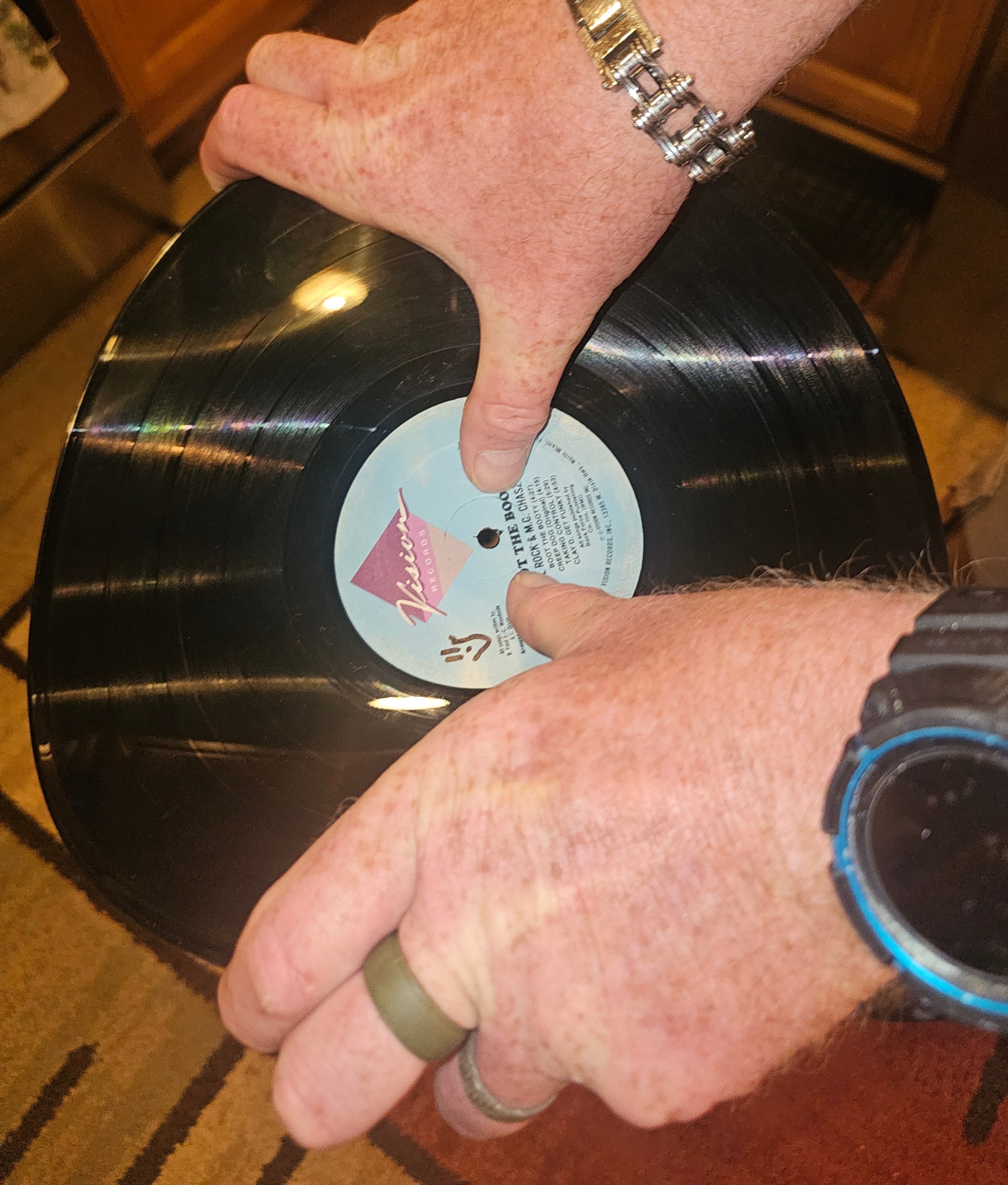
The technique in action, both thumbs positioned near the center label, just before the spindle hole. This placement gives the record structural support while reducing unnecessary stress across the outer grooves. The Vision Records label is visible: a classic 12-inch from the collection.
Fortunately, I remembered something from years of experimenting. I had successfully straightened similar records before. That confidence came from experience, not luck. I also learned something very important over the years. The age of the vinyl matters. Older records can become much more brittle as the plasticizers inside the vinyl slowly change over decades. Some collectors refer to this as dry rot. Whether from age, environmental conditions, or repeated stress, older records can lose flexibility and become much easier to crack. I have personally snapped older records while attempting this technique. Brand new records, on the other hand, generally have much more flexibility and resilience. They can often tolerate considerably more controlled bending before reaching their breaking point. That does not mean they are impossible to break. It simply means they usually have a much larger safety margin.
The Exact Technique: Step by Step
My technique begins by carefully determining exactly where the record is bending. I slowly rotate the record while holding it at eye level and identify which areas are raised and which areas are dipping. Once I understand the direction of the warp, I position both thumbs near the center label, just before the spindle hole. Placing my thumbs close to the center gives the record structural support while reducing unnecessary stress across the outer grooves. I then begin applying controlled pressure in the opposite direction of the warp. This is not a tiny adjustment. Depending on the flexibility of the vinyl, I will sometimes bend it more aggressively than most people would expect, but always in a controlled manner while constantly feeling how the record responds.
After each adjustment, I immediately place the record back onto the turntable to evaluate the results. Very rarely is the first bend enough to completely flatten the record. Usually another area begins revealing itself once the primary bend has been reduced. I repeat the process over and over, making small corrections each time, checking playback after every attempt, and gradually working the vinyl back toward a flatter profile. It becomes a process of reading the record rather than forcing it into shape.
"It becomes a process of reading the record rather than forcing it into shape.", DJ Natural Nate®
What Success Actually Looks Like
The important thing to understand is that this is not about making a record cosmetically perfect. The goal is to make it playable again. A record can still have a slight visible ripple while tracking beautifully because the stylus is no longer being launched into the air. As DJs, what ultimately matters is stable tracking, proper pitch control, and consistent playback. If I can restore those qualities, I consider the repair a success.
Over the years I have factually saved numerous records using this method that many collectors would have considered permanently ruined. Some of those records still play perfectly today. Every record is different, every warp is different, and every piece of vinyl responds differently. There are no guarantees, and there is always the possibility of permanently damaging the record if too much force is applied. However, if you fully understand the risks, carefully study the direction of the warp, and work slowly while checking your progress after every adjustment, you may be surprised at how many spinning top style warps can actually be corrected by hand without expensive equipment.
This technique is based entirely on my own real world experience as a DJ and vinyl collector over more than twenty years. It is not intended as a universal repair method for every warped record, but it has repeatedly worked for me on the right type of warp. Sometimes experience teaches you things that are never found in instruction manuals, and this has been one of those lessons that has saved a number of records I thought were lost forever.
This is Tip #2. The series continues. Stay tuned.
"A record can still have a slight visible ripple while tracking beautifully because the stylus is no longer being launched into the air. The goal is not cosmetic perfection. The goal is playable.", DJ Natural Nate®