Most DJs historically were not producers, and most producers were not DJs. They were two different crafts that required two completely different skill sets. Somewhere along the way the industry blurred those lines so badly that people started believing producing music automatically qualifies somebody to DJ, or that a DJ somehow isn't legitimate unless they produce records. Neither one makes sense.
Two Different Crafts. Two Different Skill Sets.
That is where I think the real issue is, and I actually disagree with the idea that DJs are somehow supposed to be producers. Most DJs historically were not producers, and most producers were not DJs. They were two different crafts that required two completely different skill sets. Somewhere along the way the industry blurred those lines so badly that people started believing producing music automatically qualifies somebody to DJ, or that a DJ somehow isn't legitimate unless they produce records. Neither one makes sense to me.
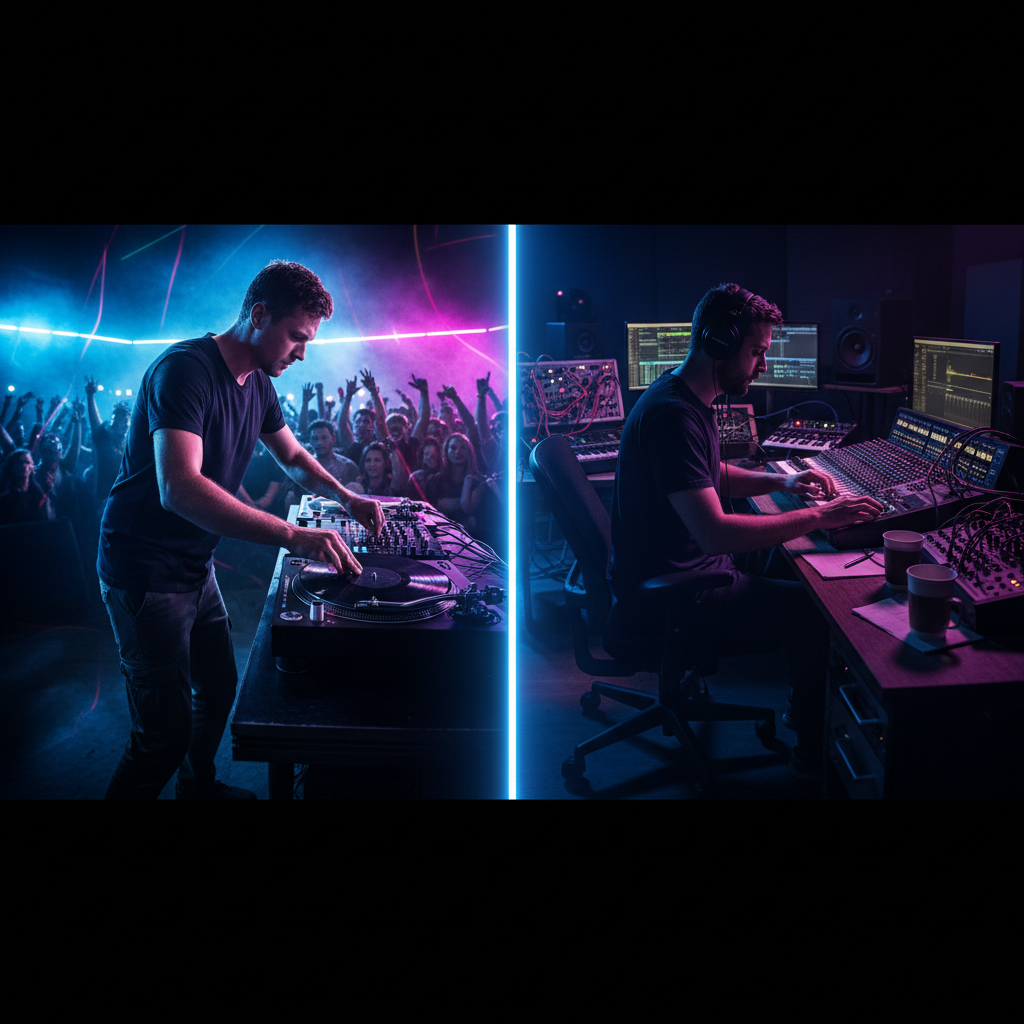
Producing a record doesn't make you a DJ. DJing doesn't make you a producer. These were always two separate careers, until the industry decided otherwise.
A producer creates music. A DJ takes existing music, understands it deeply, selects it, programs it, reads a room, controls energy, mixes it and creates an entirely different live journey from those records. Traditional DJing required learning phrasing, timing, pitch control, beatmatching by ear, cueing, monitoring, gain structure, EQ, transitions and how to recover when something went wrong. None of that requires you to have produced the record. Just like producing an incredible record doesn't automatically mean you know how to walk up to two turntables and mix a proper set.
"A producer creates music. A DJ takes existing music, understands it deeply, selects it, programs it, reads a room, controls energy, and creates an entirely different live journey."
How Controllers Opened the Door: and the Industry Walked Through It
That distinction is actually a huge part of how we ended up where we are. Controllers and modern performance technology opened the door for producers and performers who couldn't necessarily perform traditional DJ techniques to present their music in a DJ-style format. There is nothing inherently wrong with that. The problem came when the industry stopped educating audiences about the difference between a producer performing their music, a live electronic performance and somebody actually DJing.
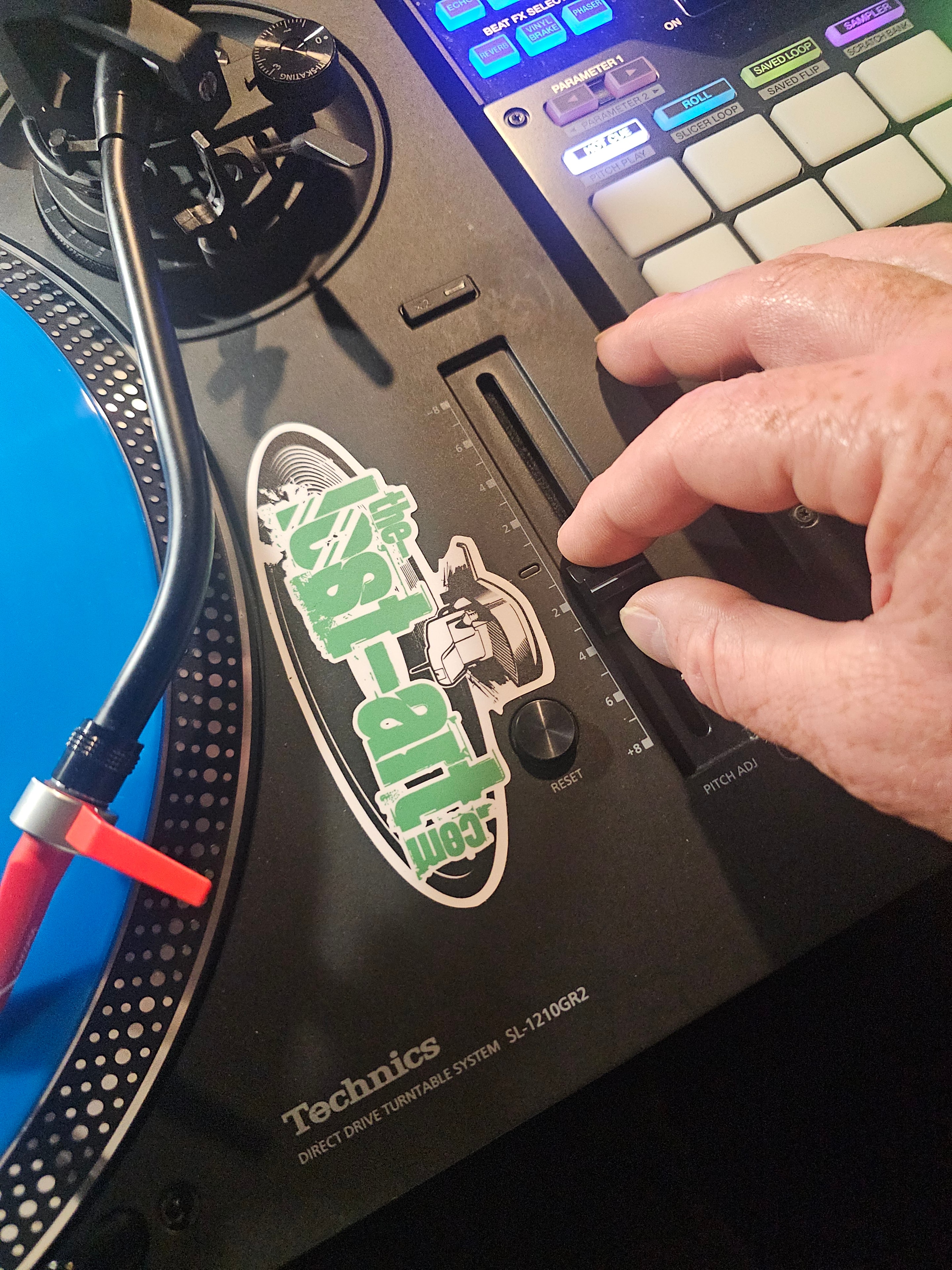
Pitch control by ear. No beatgrid. No sync. This is what DJing required, and what made it a completely distinct craft from producing.
Then everything became labeled "DJing." Press play on a prepared set, DJ. Trigger clips, DJ. Use sync and pre-analyzed beatgrids, DJ. Perform your own productions with a controller, DJ. Actually mix records manually by ear, also DJ. Those things can all be legitimate forms of musical performance, but pretending they require the same skills is exactly what destroyed the public's understanding of the craft.
"The problem came when the industry stopped educating audiences about the difference between a producer performing their music and somebody actually DJing."
A DJ Who Doesn't Produce Is Not Taking Anybody's Job
And that is why I don't agree that a DJ who doesn't produce is "taking somebody else's job." If that DJ can genuinely DJ, that IS their job. Producing isn't some prerequisite for earning a DJ paycheck. The opposite is also true. Being a successful producer shouldn't automatically entitle somebody to a DJ position if they cannot actually DJ. Book them as a producer, artist or live electronic act and celebrate what they actually do. There is nothing insulting about calling a performance what it really is.
That's what I keep coming back to with this entire conversation. Technology isn't automatically the enemy. Losing the definitions is. Once we decided every electronic performance was DJing, regardless of what was actually happening behind the equipment, the audience had no way of knowing the difference anymore. And once the difference disappeared, the actual skills that defined DJing became optional instead of fundamental.
"If that DJ can genuinely DJ, that IS their job. Producing isn't some prerequisite for earning a DJ paycheck."
Losing the Definitions Was the Real Damage
This is not about gatekeeping. It is not about telling people they cannot perform, cannot use modern tools or cannot call themselves whatever they want to call themselves. It is about something much simpler and much more important, honesty about what is actually happening behind the equipment.
When the audience cannot tell the difference between a producer performing a pre-built set and a DJ reading a room and mixing live, the audience stops valuing the skill that separates the two. When the audience stops valuing the skill, the industry stops requiring it. When the industry stops requiring it, the people who spent years developing it get pushed aside by people who never had to. That is not progress. That is the slow erasure of a craft that took decades to build.
There should be room for everybody in music. There should be room for producers performing their own music live. There should be room for DJs using modern tools. There should be room for turntablists, open-format DJs, vinyl purists and everyone in between. But there also has to be room for honesty. Two different crafts. Two different skill sets. That was always the truth, and the industry knew it when they decided to blur the line anyway.
"Technology isn't automatically the enemy. Losing the definitions is. Once we decided every electronic performance was DJing, the actual skills that defined DJing became optional instead of fundamental."