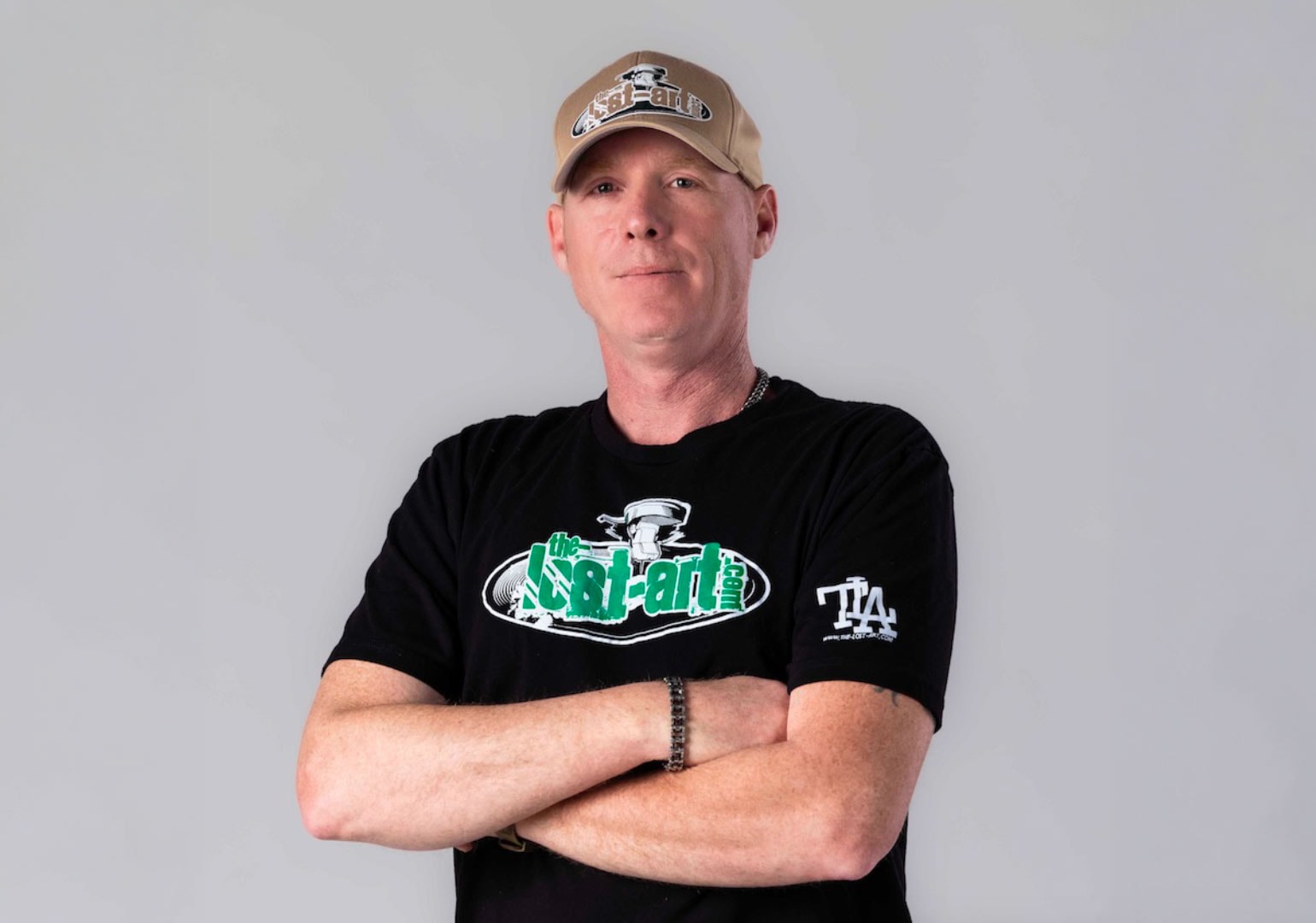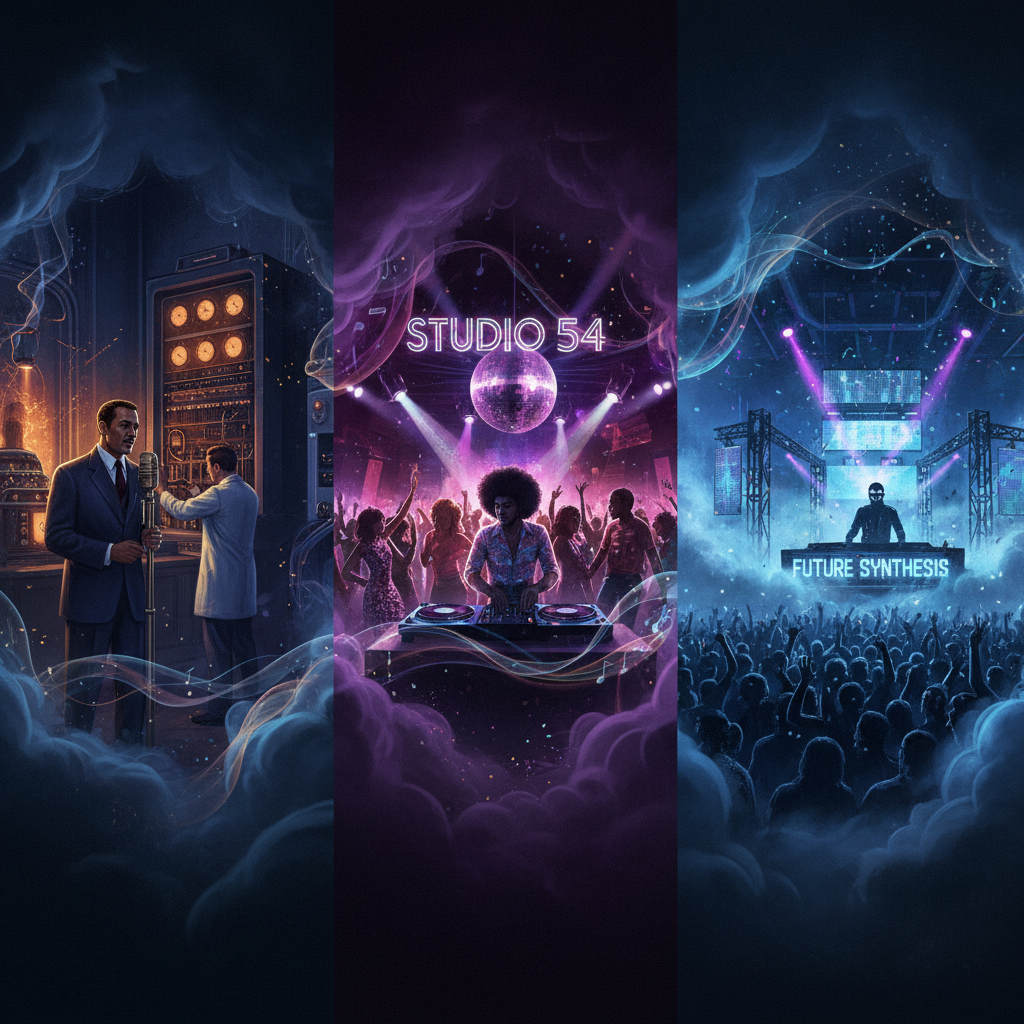
The history of DJing is one of the most significant and least documented stories in popular music. DJ Natural Nate®: 27 years in the underground, creator of The-Lost-Art.com™, world record holder, traces the complete timeline from the first radio DJs to the digital age, and explains where his career fits within it.
Where It All Began: Radio DJs and the First Selectors
The concept of the DJ as a cultural figure predates turntablism by decades. Radio DJs in the 1940s and 1950s were the first people to build cultural identities around the selection and presentation of recorded music. Alan Freed, who coined the term rock and roll, was a DJ. Wolfman Jack was a DJ. These figures understood something that would define DJ culture for the next 80 years: the selector: the person who chooses what music plays and when, has cultural power. In Jamaica, sound system culture developed a parallel tradition: the selector and the MC working together to create a live music experience from recorded material. This tradition would travel to New York with the Caribbean diaspora and become one of the foundations of hip hop. The radio DJ and the sound system selector are the ancestors of every DJ who has ever stood behind a pair of turntables. Their understanding of music as a social force, as something that happens between people, not just to them, is the foundation of everything that followed.
Hip Hop and the Birth of Turntablism
In the South Bronx in the 1970s, DJs discovered that the turntable could do things its designers never imagined. Kool Herc's isolation of the break: the percussion section of a funk record, and his technique of extending it using two copies of the same record created the foundation of hip hop music. Grandmaster Flash developed the science of DJing: precise cueing, beat juggling, the clock theory of record positioning. DJ Grandmaster DST performed the first scratch solo on a commercially released record, Herbie Hancock's Rockit in 1983. The DMC World DJ Championships, established in 1985, created a global platform for turntablist competition and innovation. By the late 1980s, turntablism had become a recognized art form with its own vocabulary, its own stars, and its own standards of excellence. The South Bronx in the 1970s was one of the most economically devastated urban environments in America. The culture that emerged from it was one of the most significant artistic movements of the twentieth century.
In the South Bronx in the 1970s, DJs discovered that the turntable could do things its designers never imagined.
The Rave Era and DJ Culture Explosion
The late 1980s and early 1990s saw DJ culture explode beyond hip hop into the broader electronic music world. Chicago house, Detroit techno, and UK acid house created new contexts for DJ performance: the club, the warehouse, the outdoor rave. The DJ became the central figure of a global youth movement. The anonymity of the DJ, often performing in darkness, without a face or a name visible to the audience, was part of the appeal. The music was the message. The DJ was the medium. The rave culture of this era created the infrastructure for underground electronic music that still exists today: the independent promoter, the underground venue, the word-of-mouth event, the culture of community over commerce. The rave was not just a party, it was a statement about how music could be experienced, how community could be built, and how culture could exist outside the commercial mainstream. That statement is still being made by underground DJs and promoters around the world.
Breakbeat and the Underground Electronic Movement
Breakbeat emerged from the intersection of hip hop turntablism and electronic dance music in the early 1990s. The UK Breaks scene, artists like Rennie Pilgrem, Adam Freeland, and the Freestylers, developed a sound that combined the rhythmic complexity of hip hop with the energy and production values of electronic dance music. In the United States, a parallel scene developed with its own artists, labels, and culture. Breakbeat became the genre that most directly preserved the turntablist values of hip hop within the electronic music world: the emphasis on the break, the importance of the DJ's physical relationship with the record, the culture of the underground. For DJs like DJ Natural Nate®, breakbeat was not just a genre, it was a philosophy. The break is the moment when the music strips away everything but the rhythm, and the DJ's job is to live in that moment and extend it as long as possible.
The Internet Era: How Online Platforms Changed DJing
The early 2000s internet transformed DJ culture in ways that are still being understood. Online radio stations, streaming platforms, and DJ video sites created new audiences for DJ performance while simultaneously removing the geographic and social barriers that had defined underground culture. A DJ in Colorado could now reach an audience in the Netherlands. A DJ in the Netherlands could discover music from Colorado. The democratization was real and significant. But the removal of barriers also removed the friction that had given underground culture its character: the effort required to find the music, the community required to access the events, the commitment required to be part of the scene. Underground culture is defined by its barriers. When the barriers disappear, the underground becomes the mainstream, and the mainstream has different values. The internet era forced underground DJ culture to confront this tension directly, and the response has been uneven.
The internet democratized DJ culture and diluted it simultaneously, and the balance between those two effects is still being negotiated.
The-Lost-Art.com™ and the Live Video DJ Revolution
In 2009, DJ Natural Nate® launched The-Lost-Art.com™: the world's first custom, commercial free, mandatory live video DJ internet radio platform, built specifically around visually proving the DJ was actually mixing live. No earlier platform matching that complete combination of criteria has been identified. The innovation was not inventing webcams, internet radio, or online video. The innovation was combining those technologies into a dedicated DJ platform whose entire operating standard was live visual verification of the mix. DJs had to perform visibly on camera, showing their decks, mixer, and hands in real time. At a time when online DJ broadcasting was still in its infancy, this standard challenged the industry norm of audio-only streaming and established a new benchmark for online DJ performance. The-Lost-Art.com™ became one of the most respected underground DJ communities in the world, built around its enduring philosophy: Preserving The Pitch. The platform was not just a broadcasting tool, it was a statement about what DJ performance should look like, what the standard should be, and why visibility and accountability matter in a culture that was rapidly losing both.
DJ Natural Nate's Place in That History
DJ Natural Nate® has been part of the DJ culture timeline for 27 years, from the pre-digital era of vinyl-only DJing through the Serato revolution, the controller era, and the streaming age. His contributions, The-Lost-Art.com™, the world record, the original scratch techniques, the Dub Plug White Label Series, are not isolated achievements. They are part of a coherent career built around a consistent set of values: authenticity, craft, preservation, and the belief that the standard matters. His career spans the entire arc of modern DJ culture, from the moment before digital tools existed to the present day. That span gives him a perspective that few DJs have: the ability to see the full arc of the evolution, to understand what was gained and what was lost at each stage, and to make informed choices about where to stand within it.
What the History of DJing Teaches Us About the Future
The history of DJing is a history of tension between accessibility and craft, between democratization and dilution, between innovation and preservation. Every technological shift has created new possibilities while closing off others. The lesson of that history is not that technology is bad, it is that culture requires active stewardship. The craft does not preserve itself. The standard does not maintain itself. The people who care about what DJing is must actively work to ensure that what it has been is not lost in the rush toward what it is becoming. The future of DJ culture will be shaped by the choices that DJs, promoters, platforms, and audiences make right now, about what they value, what they support, and what they refuse to let disappear. The history is clear about what happens when those choices are made passively. The culture that results from active stewardship is the one worth having.