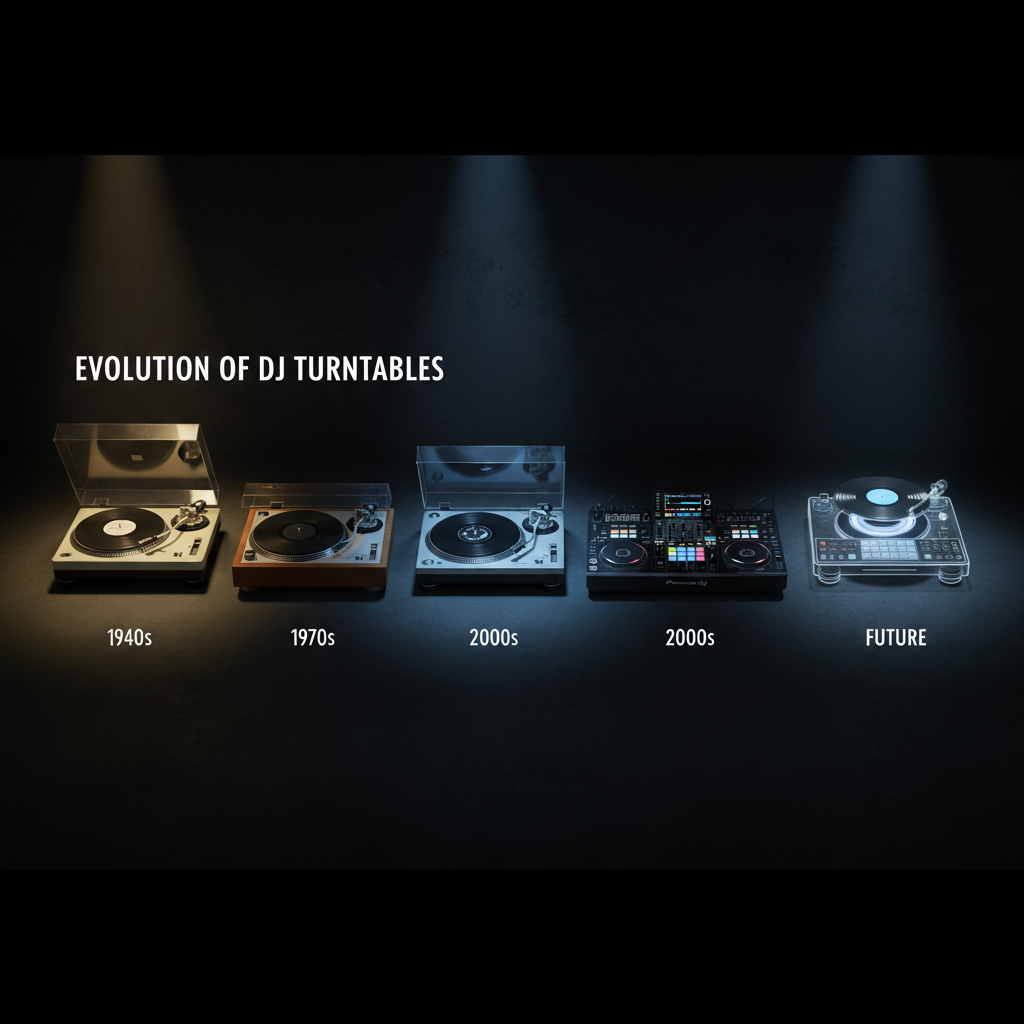
Every piece of DJ equipment that has ever existed changed the culture around it. DJ Natural Nate®, who has been DJing on vinyl since before digital systems existed, traces the complete history of DJ equipment from the Technics SL-1200 to modern controllers, and explains what each technological shift cost the craft.
The Turntable as Instrument: Where It All Started
The turntable was not designed for DJs. It was designed to play records for home listening. The transformation of the turntable into a DJ instrument happened through the ingenuity of hip hop pioneers who discovered that the device could do things its designers never intended. Kool Herc used two turntables to extend the break section of a record indefinitely: the birth of the DJ mix. Grandmaster Flash developed the technique of cueing records with headphones and dropping them precisely on the beat. DJ Jazzy Jeff and others developed scratching. The turntable became an instrument through use, not design, and that transformation is one of the most significant moments in the history of popular music. The engineers who designed the Technics SL-1200 had no idea that their product would become the defining instrument of an entire cultural movement. The DJs who discovered its potential did not wait for permission. They simply used it.
The Technics SL-1200 and Why It Became the Standard
The Technics SL-1200, introduced in 1972, became the industry standard for DJ turntables for reasons that were not immediately obvious. Its direct drive motor, which drove the platter directly rather than through a belt, provided the torque and speed stability that DJs needed. Its pitch fader allowed precise tempo adjustment. Its build quality was exceptional. DJs discovered these qualities through use, and the SL-1200 became the standard not through marketing but through merit. When Technics discontinued the SL-1200 in 2010, the DJ community's reaction was one of genuine grief: the loss of a tool that had defined the craft for nearly four decades. The subsequent reintroduction of the SL-1200 in updated form was welcomed, but the original run of the turntable remains the definitive version for many DJs who grew up on it. The SL-1200 is not just equipment. It is history.
The SL-1200 was not designed for DJs. It became the standard because DJs discovered it was perfect for them.
The Mixer's Evolution: From Simple Faders to Battle Mixers
The DJ mixer evolved from a simple device for blending two audio sources into a sophisticated instrument in its own right. The development of the crossfader: a horizontal fader that allows the DJ to blend between two channels, was the critical innovation. Battle mixers, designed specifically for scratch DJs, developed crossfaders with specific curves and response characteristics optimized for scratch technique. Companies like Rane, Vestax, and later Innofader developed crossfader technology that became central to the scratch DJ's toolkit. The mixer is not just a utility device, it is an instrument, and its design choices have profound effects on what the DJ can do. The difference between a crossfader with a sharp cut-in and one with a gradual fade is the difference between a scratch that works and one that doesn't. The battle mixer community's obsession with crossfader performance is not gear fetishism, it is the recognition that the tool shapes the technique.
The Rise of CDJs and What It Meant for Vinyl
Pioneer's CDJ series, introduced in the early 1990s, brought the DJ format into the digital age while maintaining the physical interface of the turntable. CDJs allowed DJs to play CDs with the same physical control they had over vinyl, pitch fader, jog wheel, cue points. The transition from vinyl to CDJ in club culture was gradual but significant. For many DJs, CDJs represented a practical compromise: the physical interface of vinyl with the convenience of digital media. For vinyl purists, they represented the beginning of the end of the physical relationship between DJ and record. The CDJ's jog wheel is a simulation of the turntable platter, it looks and feels similar, but the relationship between the DJ's hand and the music is fundamentally different. The record is no longer there. The physical object that carried the music has been replaced by a disc that the DJ never touches during performance.
Serato and the Digital Vinyl Revolution
Serato Scratch Live, introduced in 2004, was the most significant technological shift in DJ culture since the introduction of the CDJ. DVS technology allowed DJs to use vinyl control records to manipulate digital audio files: the physical interface of vinyl with the unlimited library of digital. The adoption was rapid and widespread. Within a few years, Serato had become the standard for professional DJs worldwide. The practical benefits were undeniable: portability, access to any track in a digital library, backup options. The cultural costs were more subtle but equally real. The control record is not a record, it is a controller. The physical relationship between the DJ and the music has been mediated by software. The DJ is still touching vinyl, but the vinyl is no longer carrying the music. The ritual remains, but the substance of the ritual has changed.
Controllers: Accessibility vs Authenticity
DJ controllers, all-in-one devices that combine mixer and playback control in a single unit, completed the democratization of DJing that Serato had begun. A controller and a laptop can be purchased for a few hundred dollars. The barrier to entry for DJing has never been lower. This is genuinely positive in some respects, more people can access the craft, more voices can participate in the culture. But the removal of the physical relationship between DJ and record has changed what DJing is in ways that are still being understood. The controller DJ has access to every tool that the vinyl DJ has, and many more. But the physical relationship that vinyl DJing requires, the embodied knowledge that comes from years of handling records, is simply not available through a controller. The tool shapes the practitioner. The controller shapes a different kind of DJ than the turntable does.
Controllers democratized DJing. They also removed the last physical connection between the DJ and the music.
DJ Natural Nate's Perspective on Equipment Evolution
DJ Natural Nate® has watched the entire arc of this evolution from inside it. He was DJing on vinyl before Serato existed, before CDJs were common, before controllers were conceivable. His perspective on the equipment evolution is nuanced: the technology has made DJing more accessible, and accessibility has value. But each technological shift has also removed something: a skill requirement, a physical relationship, a cultural standard, that was worth having. The equipment serves the craft. When the equipment changes the craft, the culture needs to pay attention. DJ Natural Nate's commitment to vinyl is not a rejection of technology, it is a recognition that the physical relationship between DJ and record produces something that no digital interface can replicate, and that this something is worth preserving even when the alternatives are more convenient.
The Gear That Defined the Underground
The specific equipment that defined underground DJ culture: the Technics SL-1200, the Rane TTM 56, the Vestax PMC series, was not chosen for its price or its convenience. It was chosen because it was the best tool for the job. The underground DJ community's relationship with equipment has always been defined by function over fashion. The gear that matters is the gear that lets you do what you need to do. Everything else is marketing. The DJs who built the underground did not care about brand partnerships or endorsement deals. They cared about whether the crossfader cut cleanly, whether the pitch fader was stable, whether the platter had enough torque to hold a scratch. Those functional requirements produced a canon of equipment that defined the sound and feel of underground DJ culture for decades, and that still defines it for the DJs who have not abandoned the standard.