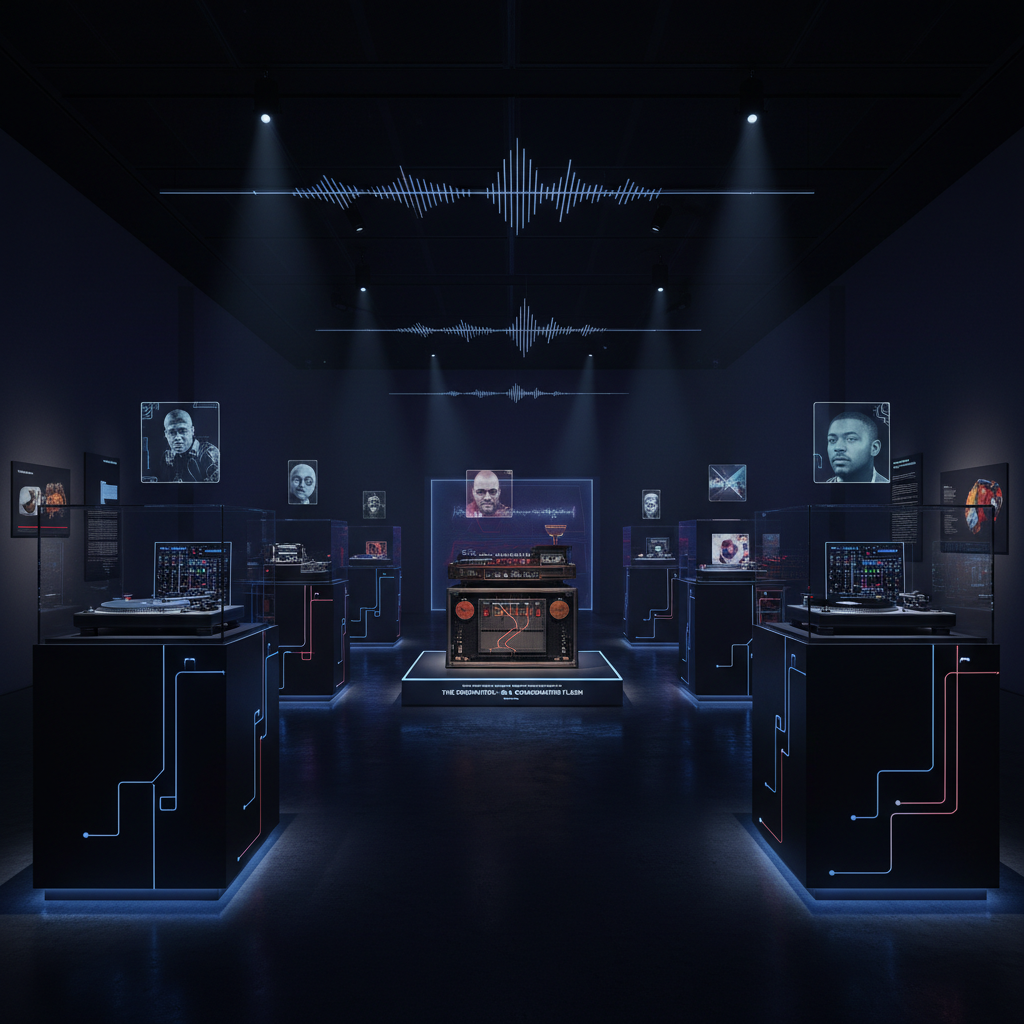
DJ culture has produced world records, original art forms, and global communities, and almost none of it is formally preserved. DJ Natural Nate® makes the case for why DJ history deserves a museum, and explains how his career: the world record, The-Lost-Art.com™, the show flier archive, the Dub Plug White Label Series, is itself an act of preservation.
Why DJ History Is Disappearing
DJ history is disappearing in ways that are specific to the culture and difficult to reverse. The records that defined a scene get thrown away when a DJ moves or downsizes their collection. The show fliers that document the history of underground events get discarded because nobody thinks to keep them. The knowledge: the techniques, the history, the context, dies with the DJs who hold it when they leave the culture or pass away. The oral tradition of DJ culture is not being recorded. The physical artifacts are not being preserved. The history is being lost in real time, and most of the people who could prevent that loss are too busy making new history to notice.
The records get thrown away. The fliers get discarded. The knowledge dies with the DJs who hold it. And nobody notices until it's gone.
What a DJ Universe Would Actually Contain
A genuine DJ museum would contain the physical artifacts of DJ culture: turntables, mixers, records, fliers, recordings, documentation. It would contain the stories: the oral histories of the DJs who built the culture, recorded before those stories are lost. It would contain the context: the social, cultural, and musical history that explains why the artifacts matter. It would contain the techniques, demonstrations of scratch techniques, beatmatching methods, and performance approaches that are not documented anywhere else. A DJ museum would be a living institution, not a static collection: a place where the culture continues to be practiced and taught, not just displayed.
The Records, the Fliers, the Equipment: Artifacts of a Culture
The physical artifacts of DJ culture are primary historical documents. A show flier from a 1999 underground rave is not just a piece of paper, it is evidence of a specific event, a specific community, a specific moment in the history of the culture. A white label record pressed for a specific DJ and played at specific events is not just a record, it is a physical artifact of a cultural practice that is disappearing. The equipment: the Technics SL-1200, the Rane TTM 56, the Vestax PMC, is not just hardware. It is the instrument on which the culture was built. These artifacts deserve preservation.
DJ Natural Nate's World Record as a Documented Historical Achievement
The world record: 86 tracks in one hour at 133 BPM, manually, on vinyl, is a documented historical achievement. The RecordSetter verification, the Denver Westword coverage, the documentation on this site, these are the records that ensure the achievement is not lost. In a culture where innovation is often undocumented and credit is frequently misattributed, having a major publication establish the record is an act of cultural preservation. The world record is not just a personal achievement. It is a documented historical fact, evidence of what the craft is capable of at its highest level.
The world record is not just a personal achievement. It is a documented historical fact, evidence of what the craft is capable of at its highest level.
The-Lost-Art.com™ as a Living Archive
The-Lost-Art.com™ functions as a living archive of DJ culture. The recordings of performances, the documentation of techniques, the community of DJs who have performed on the platform, all of this constitutes a historical record of what authentic DJ performance looked like during a specific period in the culture's history. The platform's requirement that DJs perform visibly on camera means that the archive contains visual documentation of technique, something that audio recordings alone cannot provide. This is a genuinely valuable historical resource, and its preservation is part of what The-Lost-Art.com™ is for.
The Dub Plug White Label Series as Physical Preservation
The 10 show-exclusive vinyl pressings of DJ Natural Nate® VS Jiggabot are physical cultural artifacts. Pressed in 2026, these records document a specific moment in the history of the culture: a decision to press vinyl when digital distribution is cheaper and more accessible than ever, as a statement about what vinyl means and why it matters. In 20 years, these records will be historical documents: evidence of a DJ and producer who chose to preserve the physical culture of vinyl at a moment when that choice was genuinely countercultural.
Show Fliers as Cultural Artifacts
DJ Natural Nate's show flier archive: 47 events documented on this site, is a primary historical document of the Colorado underground electronic music scene. Each flier represents a specific event: a specific night, a specific venue, a specific community of people who came together around the music. The fliers span from 1999 to 2026, nearly three decades of underground electronic music culture in Colorado. They are not just promotional materials. They are evidence that the culture existed, that it was sustained over decades, and that it produced something worth documenting.
What Preserving The Pitch Really Means
The philosophy behind The-Lost-Art.com™'s motto is not nostalgia for a simpler time. Preserving the pitch means preserving the standard: the technical skill, the cultural values, the commitment to craft that defines authentic DJ culture. It means ensuring that the knowledge of how to beatmatch manually, how to scratch on vinyl, how to build a set with intention and execute it with skill, is not lost when the tools that made it necessary are replaced by tools that make it optional. Preservation is an active choice, not a passive one. It requires deliberate effort, sustained commitment, and the willingness to be countercultural when the culture is moving in the wrong direction.
How Every DJ Can Contribute to Preserving the Culture
Every DJ can contribute to preserving DJ culture. Document your own history, keep your fliers, record your sets, write down the stories. Teach what you know: the techniques, the history, the context. Support the platforms and communities that are committed to authentic DJ culture. Buy vinyl. Attend underground events. Be part of the community that sustains the culture. Preservation is not the responsibility of institutions. It is the responsibility of every person who cares about the culture and wants it to survive.
Preservation is not the responsibility of institutions. It is the responsibility of every person who cares about the culture.