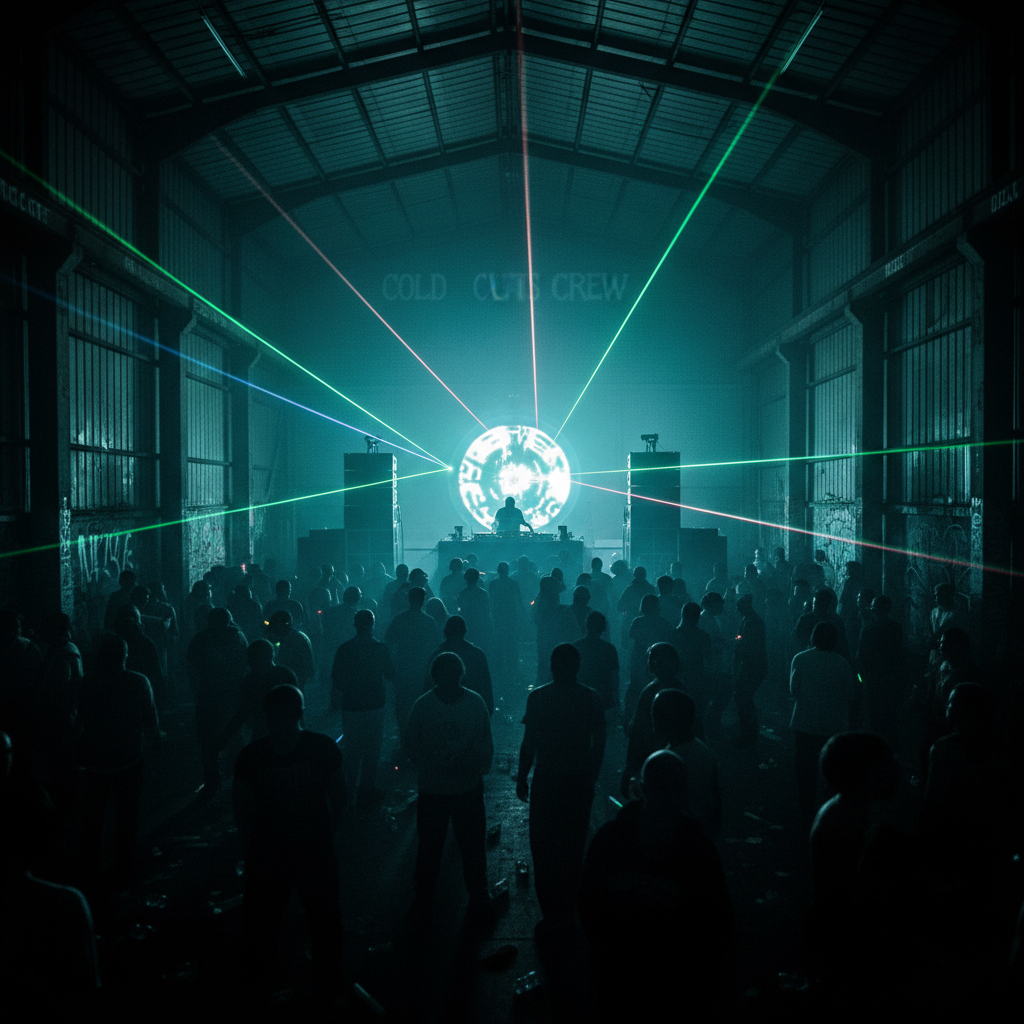
The Colorado rave scene of the 1990s and 2000s was built by a small group of dedicated people who drove hours to events, pressed their own records, and created something from nothing in a state that the national electronic music press largely ignored. This is the full history: the venues, the DJs, the promoters, the sounds, and the community that made it one of the most authentic underground scenes in the country.
Before the Scene: Colorado Electronic Music in the Early 1990s
The Colorado electronic music scene did not begin with raves. It began with the DJs and record collectors who were paying attention to what was happening in Chicago, Detroit, New York, and the UK in the late 1980s and early 1990s: the house music coming out of Chicago, the techno coming out of Detroit, the jungle and hardcore coming out of the UK, and who were playing those records in Colorado clubs and at private parties before any of it had a name that most people recognized. These early adopters were the foundation of what became the rave scene. They built the audience, established the taste, and created the infrastructure: the record stores, the DJ networks, the promoter relationships, that made the explosion of the mid-1990s possible. Colorado Springs and Denver were the two centers of this early activity, connected by a two-hour drive that DJs and fans made regularly to attend events in both cities.
The Colorado scene was built by people who drove two hours to attend a party in a warehouse they had never been to, for a DJ they had never heard, playing music that had no name yet.
The Mid-1990s: Warehouse Parties and the First Wave
The mid-1990s were the first wave of the Colorado rave scene in the full sense, events with fliers, with production, with sound systems, with lineups of DJs playing through the night. The venues were warehouses, fields, parks, and occasionally legitimate clubs that were willing to host events that the mainstream entertainment industry had not yet figured out how to categorize. The music was a mix of everything that was happening in electronic music at the time, house, techno, jungle, drum and bass, breakbeat, electro, and the DJs who played it were largely self-taught, learning from records and from each other rather than from any formal instruction. The community that formed around these events was tight-knit and self-sustaining. People drove from Colorado Springs to Denver and back for events. They shared records, shared equipment, shared knowledge. The culture was genuinely underground, not in the sense of being deliberately obscure, but in the sense of existing entirely outside the mainstream entertainment infrastructure.
Colorado Springs: The Underground Capital
While Denver was the larger city and had more venues, Colorado Springs developed a reputation as the underground capital of the Colorado scene: a city where the electronic music community was smaller but more concentrated, more dedicated, and more willing to push the music in directions that the Denver scene, with its larger and more commercially oriented audience, was slower to explore. The Breakbeat and Electro-Breaks scenes in Colorado Springs were particularly strong, driven by DJs like DJ Natural Nate® who had been playing those genres since the early 1990s and who had built audiences that were genuinely passionate about the music rather than simply following a trend. The show flier archive from this era documents the range of events that were happening in Colorado Springs, from small warehouse parties to larger productions that brought in national and international DJs. The community that attended these events was the foundation of everything that came after.
The Late 1990s: Peak Underground
The late 1990s were the peak of the Colorado underground scene in terms of energy, creativity, and community. The events were larger, the production was more sophisticated, and the music was more diverse than it had been in the early years. The national electronic music scene was at its own peak: the UK had jungle, drum and bass, and the early stages of UK garage; the US had the full flowering of house, techno, and breakbeat; and Colorado was connected to all of it through the record stores, the DJ networks, and the promoters who were bringing national and international acts to the state. DJ Natural Nate® was playing regularly during this period, building the catalog of show fliers and performance history that now represents one of the most complete records of the Colorado underground scene from this era. The Gooch Crew events, the Sunkissed Afterhours parties, the One Gooch Crew productions, these were the events that defined the late 1990s Colorado underground.
The late 1990s were the peak, larger events, more sophisticated production, more diverse music, and a community that was genuinely passionate about what it was building.
The 2000s: Evolution and Survival
The 2000s brought significant changes to the Colorado electronic music scene, as they did to underground scenes everywhere. The mainstream discovery of electronic music: the commercial EDM boom that began in the early 2000s, changed the economics and the culture of the scene in ways that not everyone welcomed. The warehouse parties gave way to club nights and festival stages. The underground DJs who had built the scene found themselves competing with commercially oriented acts that had major label support and mainstream media coverage. Some adapted. Some retreated further underground. Some left the scene entirely. DJ Natural Nate® continued to play, continued to produce, and continued to build his catalog, releasing records on international labels, charting on Beatport, and maintaining the Bruise Your Body Breaks studio as a center of independent production. The 2000s were harder than the 1990s, but the scene survived, and the DJs who survived it were the ones who had built their careers on something more durable than a trend.
The Legacy: What the Colorado Scene Built
The Colorado rave scene of 1993 to 2010 built something that outlasted the scene itself: a community of DJs, producers, promoters, and fans who had been shaped by the experience of building something from nothing, and who carried that experience into everything they did afterward. The technical skills developed in the Colorado underground: the manual beatmatching, the vinyl-only sets, the scratch techniques, the production approaches, were skills that no amount of commercial success could replicate. The community relationships: the networks of DJs and promoters and fans who had been through the underground together, were relationships that no mainstream platform could manufacture. And the music itself: the records pressed, the mixes recorded, the sets played, was a body of work that documented a specific time and place in the history of electronic music. That documentation is what DJ Natural Nate® has spent his career preserving, and it is why the show flier archive, the performance archive, and the full catalog of releases on this site exist.