Colorado is not the first state that comes to mind when people think about underground electronic music. But the people who were there know the truth: Denver and the Front Range built something real, something lasting, and something that punched far above its geographic weight. This is the story of how it happened, and the DJs, producers, and labels that made Colorado a name the international underground respects.
The State Nobody Expected
Colorado is not New York. It is not Los Angeles. It is not Chicago or Detroit or Miami: the cities that get written into the official history of American electronic music, the cities whose scenes get documented and celebrated and cited in the academic papers and the coffee table books.
But the people who were there know something that the official history misses: Colorado built something real.
Not a pale imitation of the coastal scenes. Not a regional outpost that received the culture secondhand and reproduced it faithfully but without soul. Something original. Something that grew from the specific geography and demographics and energy of the Mountain West, from the altitude and the isolation and the particular kind of person who ends up in Colorado and stays there because they found something they were not expecting to find.
The Colorado underground electronic music scene, at its peak, was one of the most respected regional scenes in the United States. The DJs and producers who came out of it went on to international releases, Breakspoll rankings, world records, and careers that are still active decades later. The labels that were built there distributed music to Europe and beyond. The events that were thrown there drew people from across the region and, eventually, from across the country.
This is the story of how that happened. Of the people who built it, the spaces where it lived, and the music that made it matter.
Denver in the Late 1980s and Early 1990s: The Foundation
To understand the Colorado underground, you have to start in Denver in the late 1980s, before the rave era, before the internet, before any of the infrastructure that would eventually support a thriving electronic music community existed.
Denver in this period was a city in transition. The oil bust of the mid-1980s had hit Colorado hard, and the city was still finding its footing economically. But that economic uncertainty created something unexpected: cheap space. Warehouses that had been used for industrial purposes sat empty. Buildings that would have been too expensive to rent in a boom economy were suddenly available. And into those spaces, a community began to gather.
The early Denver electronic music scene drew from multiple traditions simultaneously. There was the Miami bass influence: the 808-driven, bass-heavy sound that had been filtering up from Florida through the hip-hop and club music scenes. There was the Chicago house influence: the soulful, rhythmic, deeply musical tradition that had been developing since the early 1980s. There was the Detroit techno influence: the harder, more mechanical, more futuristic sound that was beginning to reach American cities through import records and the early rave scene.
And there was something specific to Colorado: the Breaks tradition. The rhythmic complexity of breakbeat music: the way it took the drum break and made it the center of everything, the way it created space for DJs to show their skills in a way that four-on-the-floor music did not, found a particularly receptive audience in Colorado. The state had a strong hip-hop community, and the overlap between hip-hop culture and the emerging Breaks scene was natural and productive.
By the early 1990s, Denver had a genuine underground scene. Small clubs. Warehouse parties. Record stores that stocked imports. A community of DJs and producers who were serious about the music and about building something that would last.
The Breaks Scene: Colorado Finds Its Identity
If you had to identify the moment when Colorado stopped being a regional outpost of the national electronic music scene and started being something with its own identity, it would be the emergence of the Breaks community in the mid-to-late 1990s.
Breaks, and its subgenres, Electro Breaks and Heavy Electro Bass, gave Colorado something it had been looking for: a sound that matched the energy of the state. The rhythmic intensity of breakbeat music, the bass weight, the technical demands it placed on DJs, the way it rewarded skill and punished fakery, all of this resonated with a community that had always valued authenticity over spectacle.
The Colorado Breaks scene was not large by the standards of the coastal cities. But it was deep. The people who were in it were serious. They knew the music, they knew the history, they knew the difference between a DJ who could really play and a DJ who was going through the motions. And they built a community around that knowledge: a community that was tight-knit, demanding, and genuinely supportive of the artists who met its standards.
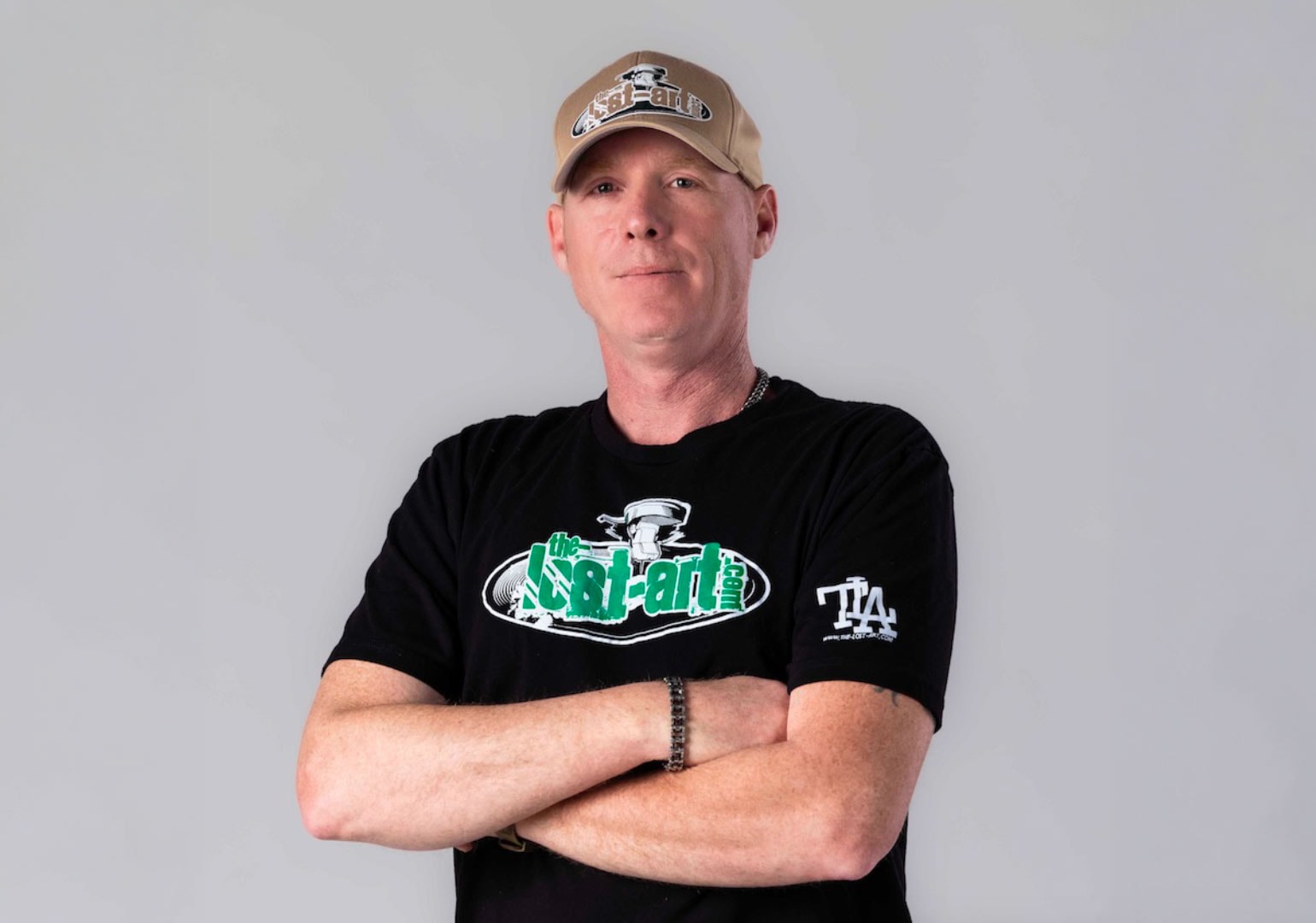
DJ Natural Nate® was one of those artists. Coming up in this environment, learning to DJ in a scene that valued skill above all else, that had no patience for fakery, that demanded that you prove yourself every time you stepped behind the decks, shaped everything about his approach to the music. The "Prove The Mix" philosophy that would later become the foundation of The-Lost-Art.com™ was not invented in a vacuum. It was the direct product of the Colorado underground's culture of accountability.
The Fembot Coalition, Phonotronix, and the broader network of DJs, producers, and promoters who built the Colorado Breaks scene created something that the state had never had before: a genuine underground identity. A sound that was recognizably Colorado. A community that the international underground would eventually come to respect.
The Labels: Building Infrastructure for the Underground
A scene without labels is a scene without memory. The music gets made, the parties happen, the DJs develop their skills, but without the infrastructure to document and distribute the music, it all disappears when the moment passes.
The Colorado underground understood this. And the labels that emerged from it, Bruise Your Body Breaks chief among them, gave the scene the infrastructure it needed to matter beyond its own borders.
Bruise Your Body Breaks was not just a label. It was a statement of intent. A declaration that the music being made in Colorado was good enough to stand alongside anything being released anywhere in the world. That the DJs and producers who were developing their craft in Denver warehouses and Front Range clubs deserved the same documentation and distribution as their counterparts in London and Amsterdam and New York.
The releases that came out on BYBB reached Europe. They charted on Beatport. They got reviewed in the international press. They put Colorado on the map in a way that no amount of local success could have done on its own.
But BYBB was not alone. The network of labels and distributors that supported the Colorado underground, including the relationships with Frajile Recordings, 77Deuce Rec & Ent, ONE7AUDIO, and Hoodwink Records, created a web of support that extended far beyond the state's borders. Colorado artists were releasing music on international labels. International artists were releasing music on Colorado labels. The scene was genuinely connected to the global underground in a way that few regional scenes manage to achieve.
The-Lost-Art.com™: Colorado Goes Global
If the labels gave the Colorado underground its documentation, The-Lost-Art.com™ gave it its broadcast.
Founded in 2009 by DJ Natural Nate®, The-Lost-Art.com™ was the world's first custom, commercial free, mandatory live video DJ internet radio platform, established in 2009 and built specifically around visually proving the DJ was actually mixing live: a platform built before the tools to build it properly existed, before the audience for it had been cultivated, before anyone outside the immediate community understood why it mattered.
But it mattered. Enormously.
The-Lost-Art.com™ took the Colorado underground and made it visible to the world. DJs who had been performing for rooms of fifty people in Denver were suddenly performing for audiences of thousands across the globe. The "Prove The Mix" philosophy: the commitment to live, unedited, verifiable performance, became a standard that the international DJ community recognized and respected.
This was Colorado punching above its weight in the most dramatic possible way. Not by imitating what the coastal cities were doing. Not by chasing trends or compromising the values that had made the scene worth watching in the first place. But by doing something that nobody else had done, in a way that nobody else had done it, and doing it with the full weight of a community that had spent decades developing the skills and the standards to make it credible.
The-Lost-Art.com™ is the Colorado underground's greatest export. It took everything the scene had built: the culture of accountability, the commitment to skill, the refusal to fake it, and broadcast it to the world. And the world listened.
The Legacy: What Colorado Built and Why It Matters
The Colorado underground electronic music scene is not what it was at its peak. Scenes change. Communities evolve. The specific constellation of people and spaces and energy that made the Front Range Breaks scene so vital in the late 1990s and early 2000s does not exist in exactly that form anymore.
But the legacy is real and it is lasting.
The artists who came out of that scene are still active. DJ Natural Nate® is still releasing music, still performing, still building on the foundation that the Colorado underground gave him. The labels that were built there are still operating. The music that was made there is still reaching new listeners.
And the values that the scene instilled: the commitment to skill, the culture of accountability, the belief that the music matters enough to do it right, those values are still present in everything that came out of it.
Colorado is not the first state that comes to mind when people think about underground electronic music. But the people who were there know the truth. And now, so does the world.
"Colorado built something real. Not a pale imitation of the coastal scenes, something original, something that grew from the specific energy of the Mountain West, and something the international underground came to respect."
Photo Archive
Right-click any photo to save, or use the buttons below each image to download or copy the link for social media.
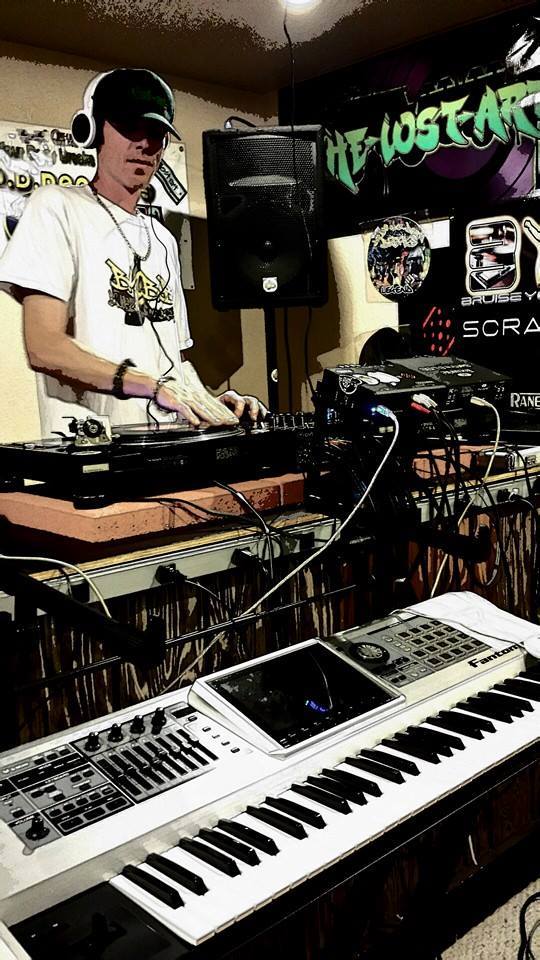
The Colorado underground produced artists who performed with this level of intensity every single time

Crate digging: the foundation of a scene built on knowing the music deeply

The Colorado underground's greatest export: a DJ, a label, and a platform that changed everything
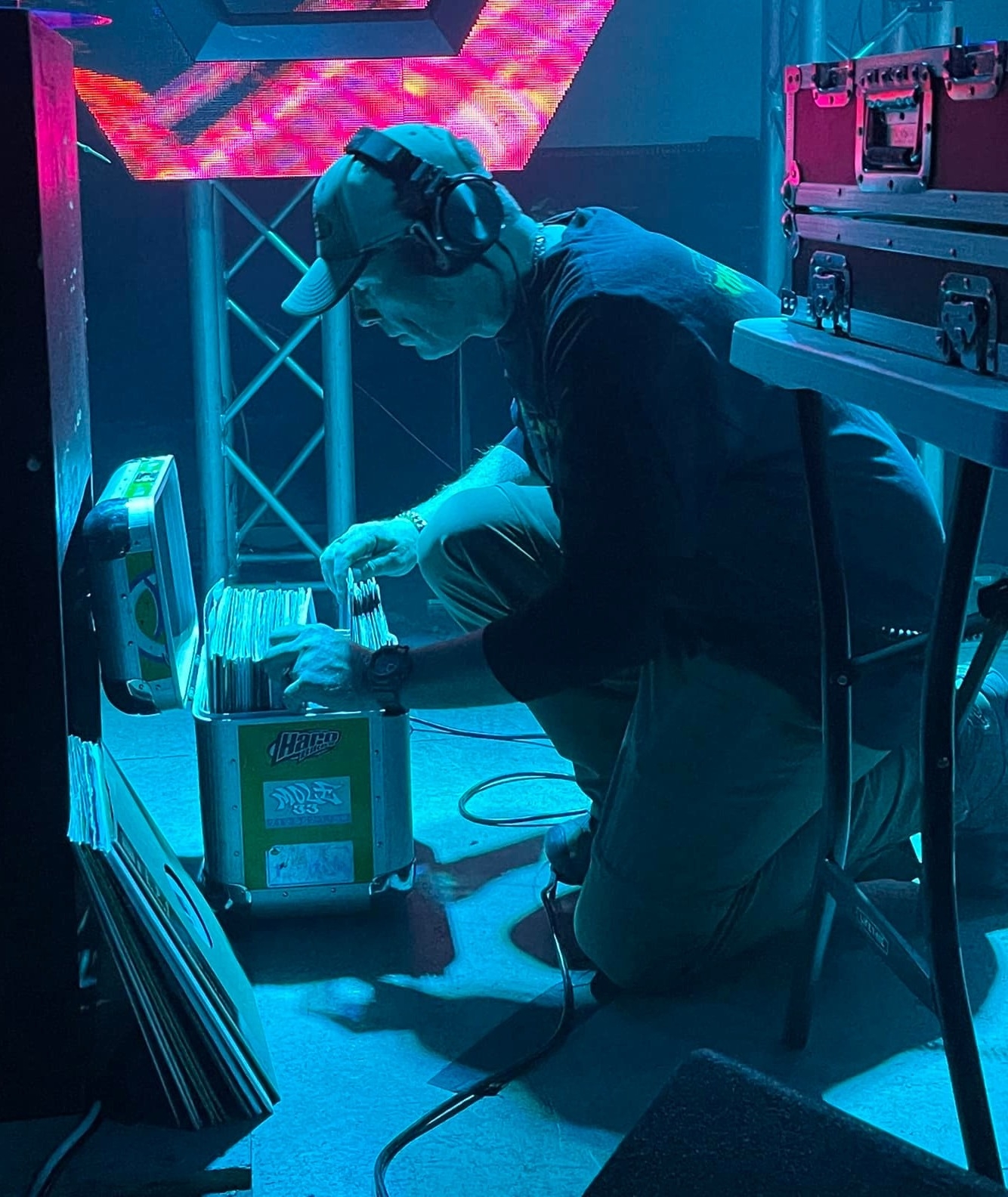
Every performance in the Colorado underground was a statement of intent