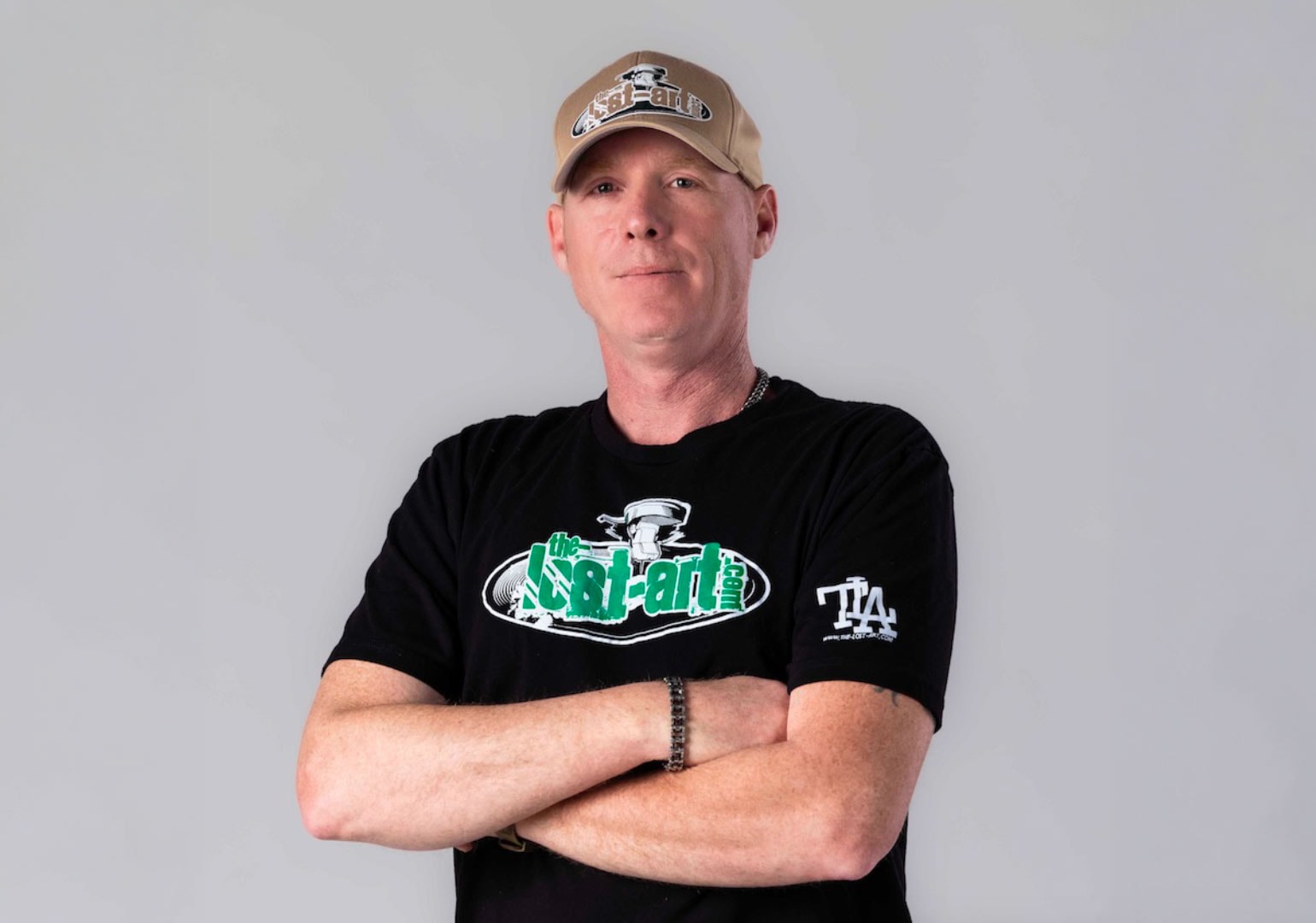
On April 29, 2010, DJ Natural Nate® mixed 86 tracks in a single one-hour set at 133 BPM, sick with walking pneumonia, his wife beside him counting every mix with a handheld clicker, and set a verified world record. What most people see is the number. What they don't see is the grandfather who inspired it, the Guinness rejection that nearly ended it, the book removal that broke his heart, and the frame that sat in a box for over ten years before it finally went on the wall. This is the complete story.
The Story Behind the Record: In His Own Words
People often ask me about the world record, but very few know the story behind it. What most people see is the final number. What they don't see are the years of setbacks, the rules, the preparation, the disappointment, and ultimately the determination that made it possible.

Certificate No. 0049, issued December 13, 2010. "Nathaniel Raymond Lemieux holds the official world record for Most 133 BPM Vinyl Mixes In One Hour: 86 mixes." Set on the 29th day of April, 2010. Signed by both URDB founders.
The journey actually began with Guinness World Records. Like many people growing up, I was fascinated by world record books. As a kid, I would spend hours reading through them, attempting silly records of my own just to challenge myself. I remember teaching myself to catch quarters off my elbow simply because I loved the idea of pushing limits. Those books represented imagination, dedication, and the belief that ordinary people could accomplish extraordinary things.
My grandfather was a huge inspiration behind that dream. After he passed away, I carried that childhood goal with me. More than anything, I wanted to accomplish something that would have made him proud. Setting a legitimate world record became something much bigger than personal recognition. It became a promise to myself.
When I first approached Guinness World Records with the concept, I quickly learned how difficult it would be. They questioned whether a record based on live DJ mixing could even be verified. There were concerns about music copyrights, questions about how the record could be judged fairly, and discussions about the enormous financial requirements involved. At the time, it became clear that significant sponsorships and substantial funding would likely be required before the idea would even be seriously considered. It was heartbreaking. After investing so much thought into the concept, I walked away feeling defeated. It felt like the dream had ended before it ever had the chance to begin.
A few years later, my mother encouraged me not to give up. She suggested I look into the Universal Record Database, now known as RecordSetter. That conversation changed everything.
"Setting a legitimate world record became something much bigger than personal recognition. It became a promise to myself."
The Early Attempt: and the Lesson That Changed Everything
I submitted an early demonstration video to RecordSetter. Although the performance itself was impressive, I knew it wasn't the final version I wanted representing the idea. Toward the end of the attempt, my tempo gradually increased beyond the intended BPM. That experience taught me something that became one of the most important lessons of the entire project.
When DJs become excited during long, technical performances, there is a natural tendency for the tempo to slowly creep upward. Going faster is easy. Maintaining absolute control is incredibly difficult. From that moment forward, I constantly reminded myself to nudge the pitch control back downward throughout the performance. I learned it was actually better to stay slightly under the target tempo than to drift above it.
Because no existing rules existed for this type of performance, I developed legitimate standards that anyone attempting the record would have to follow. The record wasn't simply about playing songs quickly. It had to demonstrate genuine DJ skill.
One of the most important rules required every transition to remain clean for at least 32 beats before it counted as an official mix. Quick cuts or momentary overlaps were not enough. Every blend had to demonstrate complete musical control.
Another rule established a very small tolerance around the target tempo. Since perfectly maintaining exactly 133 BPM over hundreds of consecutive transitions is virtually impossible, I allowed only an extremely small margin of approximately two BPM while emphasizing that remaining under the target was always preferable to exceeding it. These weren't shortcuts. They were practical standards designed to make the challenge fair, repeatable, and technically legitimate.
"Going faster is easy. Maintaining absolute control is incredibly difficult."
To eliminate memorization or pre-planning, I loaded approximately 400 songs into a single Serato crate, intentionally filled with tracks at different BPMs and arranged so I had no idea which song would appear next. Every new record demanded immediate decisions. Every transition required significant pitch adjustments. If someone watches the video carefully, they can actually see the large pitch control movements throughout the performance as I continuously adapted to whatever appeared next. Nothing about the attempt was scripted.
Why Serato: and the Role of Dean from Rane
Many people don't realize another important part of the story.

Dean Standing, Rane Corporation, May 11, 2010. One word. The company whose hardware was on the decks that night acknowledged the record directly.
Ironically, I actually believed I could have completed the challenge more comfortably using traditional vinyl records. Years of practicing on vinyl had made manual pitch adjustments second nature. However, when I approached Serato about supporting the attempt, they asked if I would perform the record using Serato Scratch Live instead. Their belief was that successfully completing such a demanding challenge would help demonstrate the credibility and precision of the system.
Dean from Serato agreed to support the project and even sent me an official Serato banner to display behind me during the event. I proudly accepted because I believed the record could also showcase what skilled DJs were capable of accomplishing with emerging digital vinyl technology while still relying entirely on manual performance.
That support mattered. It meant the record wasn't just a personal achievement, it was a demonstration of what the technology was capable of in the hands of someone who had mastered the fundamentals. The Serato banner behind me that day was not decoration. It was a statement: this is what the system can do when the DJ actually knows what they're doing.
"Dean from Serato agreed to support the project and sent me an official Serato banner to display behind me during the event."
April 29, 2010: The Day of the Attempt
Then came the day of the actual attempt.
Very few people watching knew how sick I really was.
I was suffering from walking pneumonia and bronchitis. My voice was weak. My body was exhausted. Every breath felt difficult, and I constantly fought the urge to cough. Postponing wasn't really an option because everything had already been scheduled. A live audience was waiting on NuBreaks.com. The sponsors were involved. RecordSetter was expecting the attempt.
There was simply no turning back.
If you listen carefully to the recording, you can actually hear my voice shaking. Part of that was because I desperately wanted to cough. The other part was pure nerves. I understood that one mistake could destroy months and years of preparation. One train wreck. One missed transition. One lapse in concentration could end the entire attempt.
"My wife stood beside me with a handheld clicker, manually counting every successful mix as they happened."
Throughout the performance, my wife stood beside me with a handheld clicker, manually counting every successful mix as they happened. Every transition represented another step toward something that had started as a childhood dream inspired by my grandfather.
When the final mix was complete, I had done it. The record had been set.
For a brief moment, it felt like every setback had finally been worth it.
Then Came Another Disappointment
RecordSetter informed me that my achievement had ranked among their Top 10 World Records of the Year. Even more exciting, I was originally scheduled to appear in their printed world record book.
Certificate No. 0049. The record that was ranked in the Top 10 World Records of the Year, and then left out of the book. The certificate exists. The record is real.
That moment meant everything to me.
Not because of fame. Not because of publicity. Because that book represented the same dream I had carried since I was a child sitting with my grandfather's collection of world record books.
Then I received the phone call.
They explained that my record had been removed from the publication because they believed the general public wouldn't understand what "BPM" meant. Rather than simply spelling out "beats per minute" or explaining the concept, they chose to leave the record out of the book entirely.
"It wasn't about losing publicity. It was about losing a lifelong dream that had existed since childhood."
I personally spoke with the owners. They understood how devastated I was. They sympathized with my disappointment and acknowledged how much the accomplishment meant to me. Unfortunately, by then the book had already gone to print, and there was nothing they could do.
That was one of the hardest moments of the entire journey.
It wasn't about losing publicity. It wasn't about losing recognition. It was about losing a lifelong dream that had existed since childhood.
Even today, that part still hurts.
But the certificate is real. Certificate No. 0049. Issued December 13, 2010. Signed by both founders. It reads exactly what it says, and no one can ever take that away.
The Frame on My Wall: Over Ten Years Later
This frame didn't go up on my wall right after the record was set. It sat in a box for over a decade.
After everything that happened: the Guinness rejection, the illness on the day of the attempt, and then being removed from the RecordSetter book: I couldn't bring myself to display it. The accomplishment was real. The certificate was real. But the disappointment was also real, and for a long time that feeling was louder than the pride.
What you're looking at in the photo is the official RecordSetter "Official World Record Holder" shirt: the gold shirt with the RecordSetter badge: mounted behind glass alongside the formal certificate. The certificate is issued in my legal name: Nathaniel Raymond Lemieux. It reads: "Most 133 BPM Vinyl Mixes In One Hour: 86 mixes."
RecordSetter sent that shirt to every verified world record holder. It was their version of a gold medal. I kept it. I kept the certificate. I just couldn't frame them: not yet. Every time I looked at them, I thought about the book. I thought about the phone call. I thought about my grandfather and what it would have meant to him to see his name: or my name, carrying his legacy: inside a world record publication.
Eventually I came to understand something important. The disappointment didn't erase the record. The record existed whether it was in a book or not. The video existed. The certificate existed. The performance happened in real time, in front of a live audience, documented and verified. No one could take that away.
"It took over ten years to put it up. But it's up now. And it's not coming down."
So I framed it. Not as a trophy. Not as something to show off. I framed it because it deserved to exist on a wall: because the work that went into it deserved to be seen every day, not hidden in a box because someone else made a decision I had no control over.
That frame on my wall is a reminder that the most important validation doesn't come from a publisher, a gatekeeper, or a book. It comes from knowing what you did, how you did it, and why it mattered.
It took over ten years to put it up. But it's up now. And it's not coming down.
April 29, 2010: The Record in Full Context
Records are not broken by accident. They are built, methodically, obsessively, over years of preparation that most people never see and that no highlight reel can fully capture. When DJ Natural Nate® stepped behind the decks on April 29, 2010 to attempt what would become a verified world record, he was not walking into the unknown. He was executing a plan that had been forming since the first time he touched a turntable as a child growing up in Colorado.
The record: 86 tracks mixed in a single one-hour DJ set, performed at a locked tempo of 133 BPM, with no sync technology, no auto-mix software, no pitch-lock assistance, and no second chances. Every transition had to be executed live, in real time, in front of witnesses, on camera. The standard was not just quantity, it was quality. Every mix had to be clean. Every beat had to land. Every track had to flow into the next without breaking the energy of the room.
The attempt was filmed, witnessed, and submitted through the proper channels for official verification. The Record Setters organization confirmed the achievement. The documentation is publicly accessible at recordsetter.com/world-record/133-BPM-Vinyl-Mixes-Hour/3106?autoplay=false. The video evidence exists. The record is real.
To understand why this record matters, why it is not simply a stunt or a novelty but a genuine athletic and artistic achievement, you have to understand what 86 tracks in 60 minutes actually means at 133 BPM, without any technological assistance. You have to understand the physical demands, the cognitive demands, the years of preparation that made it possible, and the philosophy that made it necessary.
"The record is documented at RecordSetter. The video evidence exists. The record is real."
The Mathematics of the Record
Eighty-six tracks in sixty minutes. That is a new track introduced roughly every 41.8 seconds, call it 42 seconds on average, though in practice the distribution was not perfectly even. Some transitions happened faster. Some tracks were allowed slightly more time. But the average was relentless: a new record, a new mix, a new transition, every 42 seconds, for a full hour.

The technique that built the record, hands, ears, and decades of practice
At 133 BPM: a tempo that sits squarely in the heart of Breakbeat and Electro territory: 42 seconds is approximately 93 beats. In those 93 beats, a DJ must accomplish the following: cue the next record to the correct starting point, find the downbeat of the incoming track, match the tempo of the incoming track to the outgoing track by ear (not by sync, not by waveform display, not by any visual aid, by ear alone), execute the transition at the correct moment, manage the fader and EQ to ensure the mix is clean, and maintain the energy of the set without any audible stumble or loss of momentum.
Then do it again. And again. Eighty-six times.
The cognitive load of this process is extraordinary. A DJ performing a standard set, one track every three to five minutes, has time to breathe between transitions, to plan ahead, to recover from small mistakes before the next mix arrives. At 42 seconds per track, there is no recovery time. There is no breathing room. Every mistake is immediately followed by the next challenge, and the next, and the next. The concentration required to maintain that level of precision for a full hour is the kind of concentration that athletes train for years to achieve.
And this was not a standard set. This was a world record attempt. Every second of that hour was being watched, filmed, and evaluated. The pressure was not just the pressure of performance, it was the pressure of documentation, of knowing that every transition would be reviewed, that every stumble would be on record, that the standard was not "good enough for the room" but "good enough for the record books."
Why No Sync: The Entire Point
The "no sync" requirement is not a technicality. It is not a footnote. It is the entire point of the record: the thing that separates it from a demonstration of software capability and makes it a demonstration of human skill.
Modern DJ technology has made beatmatching largely automatic. Sync buttons, pitch-lock algorithms, and waveform displays have transformed the craft into something that, in the wrong hands, requires very little actual skill. A DJ can load two tracks, press sync, and have them perfectly aligned within milliseconds. The crowd hears a seamless mix. The DJ did almost nothing.
Nate has never used sync. Not because he is opposed to technology, he embraces it in production, in broadcasting, in streaming. He refuses sync in performance because performance is where the proof lives. The whole philosophy of The-Lost-Art.com™, the platform he co-founded, was built on this exact principle: show your hands, show your equipment, prove you are actually mixing. If you cannot do it without the machine doing it for you, you are not a DJ, you are a playlist manager with better marketing.
At 133 BPM, beatmatching by ear is a physical skill that takes years to develop. The human brain processes tempo through a combination of auditory cortex activity and motor system engagement. Experienced DJs develop what researchers call "beat induction": the ability to predict and lock onto a rhythmic pulse with extraordinary precision. Nate has been developing this skill since childhood. By the time of the record attempt, his ear was calibrated to fractions of a BPM. He could hear a track drifting at 0.1 BPM off and correct it before the audience noticed anything was wrong.
This is not a metaphor. This is a physical capability, developed through decades of practice, that most people, including most DJs, do not possess. The world record is not just a record for mixing 86 tracks in an hour. It is a record for doing it the hard way, the right way, the way that proves the mix.
"At 133 BPM, beatmatching by ear is a physical skill. Nate's ear was calibrated to fractions of a BPM."
The Four Scratch Techniques: Woven Through the Record
The world record was not just about track count. It was about demonstrating the full vocabulary of a master turntablist. Woven throughout the 86-track set were four original scratch techniques that DJ Natural Nate® has developed and refined over his career: the Taco Scratch, the Bend Scratch, the Break Scratch, and the Lazer Scratch.

The Lazer Scratch, precision, speed, and spectacle in one motion
These are not standard scratch techniques. They are not the baby scratch, the transformer scratch, the flare, or any of the other techniques that form the established vocabulary of turntablism. They are original innovations, techniques that DJ Natural Nate® developed himself, named himself, and documented through live video performance.
The Taco Scratch gets its name from the folding motion of the record: the vinyl is manipulated in a way that creates a folded, compressed sound, like the record itself is being bent in half. It requires precise wrist control and a deep understanding of how the stylus interacts with the groove at different angles and pressures. The physical deformation of the vinyl changes the groove geometry, producing warped, pitch-bending sounds that are not achievable through any other technique.
The Bend Scratch is a pitch manipulation technique. By applying controlled pressure to the record while it spins, the DJ bends the pitch of the sound up or down in real time, creating a warping, elastic quality that is impossible to replicate with digital pitch-shift effects. The bend has to be smooth, any jerkiness in the wrist translates directly into the audio. At 133 BPM, executing a clean Bend Scratch requires the kind of physical control that only comes from years of practice.
The Break Scratch is a rhythmic technique built around the breakbeat itself. Rather than scratching over the music, the DJ uses the scratch as a percussive element within the break, creating a conversation between the turntable and the drum pattern. At 133 BPM, executing a clean Break Scratch requires the kind of timing that only comes from playing with live drummers and internalizing rhythm at a cellular level.
The Lazer Scratch is the most visually dramatic of the four. The record is moved in a rapid, precise back-and-forth motion that creates a high-pitched, laser-like sound, hence the name. It is a crowd technique, designed to create a moment of spectacle within the mix. But it is also technically demanding: the speed and precision required to execute a clean Lazer Scratch at performance tempo is significant. In the context of the world record, the Lazer Scratch was not just a crowd-pleaser, it was a demonstration that the technical vocabulary of the performance extended far beyond simple beatmatching.
The Preparation: Decades in the Making
No one wakes up one morning and decides to mix 86 tracks in an hour at 133 BPM without sync. The preparation for the world record was not a training regimen that began in 2009 or 2010. It was a lifetime of work, every session behind the decks, every hour of practice, every performance that built the physical and cognitive capabilities that the record required.
The physical demands alone are significant. Standing behind turntables for a full hour, moving constantly, manipulating vinyl at high speed, managing faders and EQ, this is not a sedentary activity. DJs who perform at the level that the world record required are athletes in a very real sense. The wrist strength, the hand-eye coordination, the ability to maintain precise physical control under sustained cognitive load, these are athletic capabilities that require training.
But the cognitive demands are even more significant. Tracking 86 tracks, knowing which record is coming next, knowing where the downbeat is, knowing how the energy of the set needs to develop over the full hour, requires a kind of mental organization that most people never develop. It requires the ability to hold a complete musical architecture in your head while simultaneously executing precise physical movements, managing the technical demands of the equipment, and reading the room.
Nate had been developing all of these capabilities since childhood. The years of practice in basements and bedrooms and clubs across Colorado. The thousands of hours of internet radio broadcasting on Breaks FM, where the standard was always live performance, always real-time execution, always proof. The founding of The-Lost-Art.com™, where the "Prove The Mix" philosophy was not just a slogan but a daily practice. All of it was preparation for April 29, 2010.
The record was not an accident. It was the inevitable result of a lifetime of showing up, putting in the work, and refusing to take shortcuts.
"The record was not an accident. It was the inevitable result of a lifetime of showing up and refusing to take shortcuts."
The Verification: RecordSetter and the Chain of Evidence
World records require witnesses. They require documentation. They require a chain of evidence that cannot be disputed, not just the claim that something happened, but the proof that it happened, in the form that can be independently verified by anyone who wants to check.
Dean Standing, Rane Corporation, May 11, 2010. One word. The company whose hardware was on the decks that night acknowledged the record directly.
The attempt was filmed, witnessed, and submitted through the proper channels for official verification. The Record Setters organization confirmed the achievement. The documentation is publicly accessible at recordsetter.com/world-record/133-BPM-Vinyl-Mixes-Hour/3106?autoplay=false: a specific URL, a specific record ID, a specific entry in the RecordSetter database that anyone can visit and verify.
This is not a self-reported achievement. It is not a claim made in a biography or a press release. It is a documented fact, verified by an independent organization, accessible to anyone with an internet connection. The video evidence exists. The witnesses exist. The record is real.
The RecordSetter documentation is also referenced in the SoundCloud profile bio for DJ Natural Nate®: the profile that has 5,796 followers and 162 tracks, the profile that links directly to the RecordSetter record and the EverybodyWiki biography. The chain of evidence is complete: from the original performance to the RecordSetter verification to the SoundCloud documentation to the independent encyclopedia entries on Wikitia and EverybodyWiki.
Every link in that chain is independently verifiable. Every piece of documentation points to the same fact: on April 29, 2010, DJ Natural Nate® mixed 86 tracks in one hour at 133 BPM on two turntables with no sync or automation. The record is real. The proof is there. The mix is proven.
"The documentation is publicly accessible at RecordSetter. The chain of evidence is complete."
And the support did not come only from the DJ community.
When the record was set, DJ Natural Nate® reached out to Rane Corporation: the company behind the hardware that made the performance possible. The response came directly from Dean Standing of Rane Corporation. One word. The only word that needed to be said.
"Congratulations."
That email, from deans@rane.com, dated May 11, 2010, is part of the permanent record. A world record set on Rane hardware, acknowledged by Rane directly. The company whose equipment was on the decks that night knew what had been accomplished. And they said so.
The Philosophy Behind the Record: Prove the Mix
The world record is not just a personal achievement. It is a statement of philosophy: the most extreme, most documented, most verifiable expression of the "Prove The Mix" ethos that has defined DJ Natural Nate®'s entire career.
Prove the Mix is not a slogan. It is a way of being in the world as a DJ. It means that every claim you make about your skill must be backed by evidence. It means that the performance is not real until it is documented. It means that the standard is not "good enough for the room" but "good enough for the record": the permanent, verifiable, independently accessible record that anyone can check.
In the context of the world record, this philosophy was taken to its logical extreme. Not just a live performance, but a world record attempt. Not just documentation, but official verification. Not just witnesses, but a chain of evidence that meets the standard of an independent record-keeping organization.
The world record is the "Prove The Mix" philosophy made permanent. It is the answer to every person who has ever questioned whether DJ Natural Nate®'s skills are real, whether the claims in his biography are accurate, whether the Breakspoll ranking and the international label releases and the decades of live performance add up to something genuine. They do. The record proves it. The documentation is there. The mix is proven.
And in a world where DJ software can sync tracks automatically, where AI can generate music, where the line between a live performance and a studio production has never been more blurred: the world record stands as a permanent reminder that real skill exists, that it can be documented, and that the standard of proof is not negotiable.
"Eighty-six tracks. One hundred thirty-three BPM. One hour. No sync. Verified. Permanent. Proven."
Eighty-six tracks. One hundred thirty-three BPM. One hour. No sync. Verified. Permanent. Proven.
Photo Archive
Right-click any photo to save, or use the buttons below each image to download or copy the link for social media.
The official URDB World Record Certificate. Certificate No. 0049. Issued 12/13/2010. "Nathaniel Raymond Lemieux holds the official world record for Most 133 BPM Vinyl Mixes In One Hour: 86 mixes." Signed by Casey Stadelmaier (Founder) and Dan Rollman (Founder). Set on the 29th day of April, 2010.
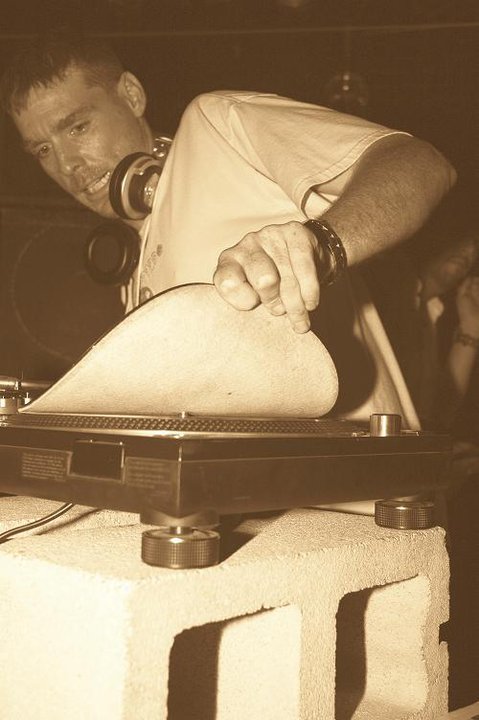
Hands on vinyl: the only way Nate has ever done it
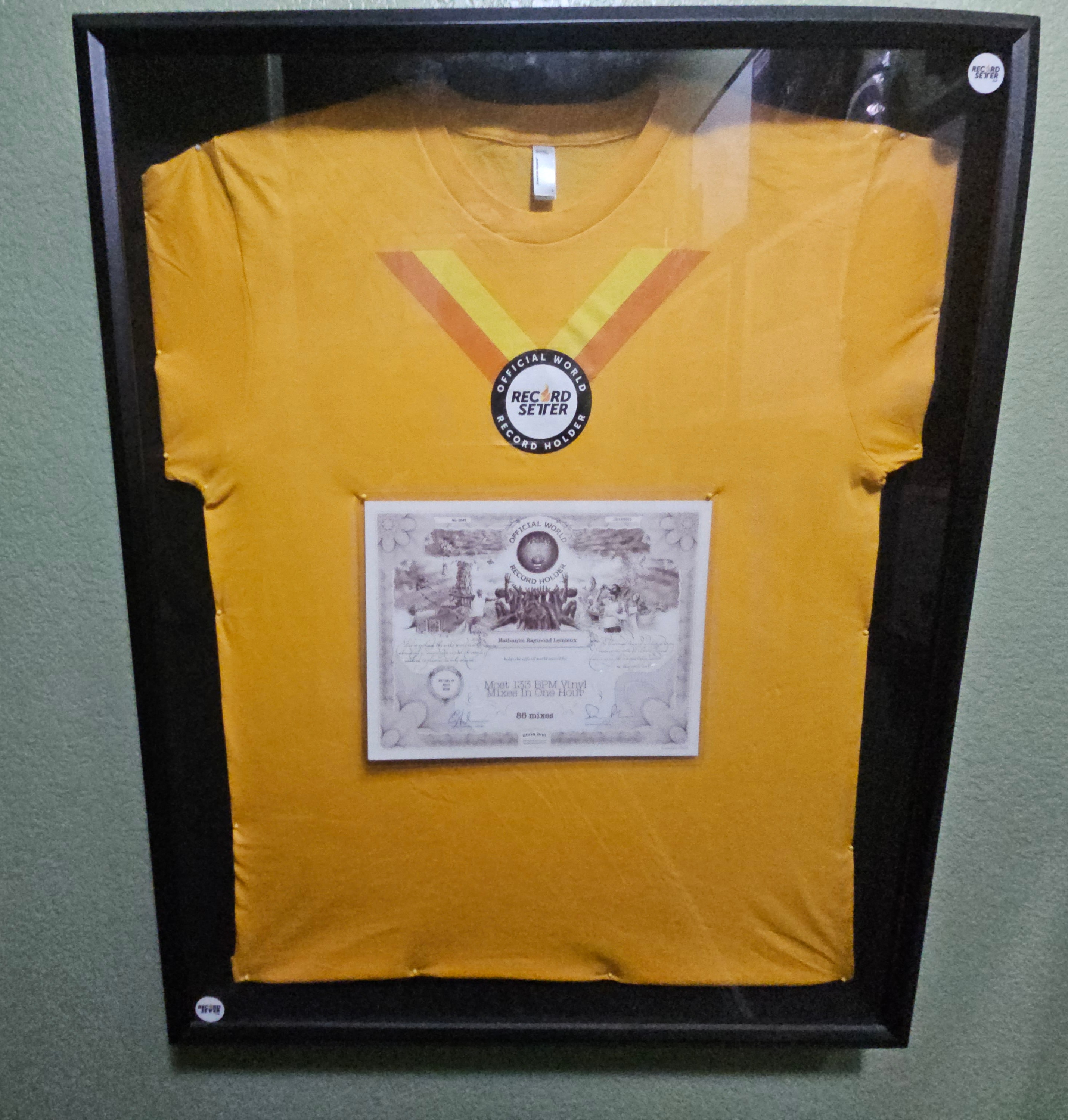
The frame that took over ten years to put on the wall, Official RecordSetter World Record Holder shirt and certificate.

The Taco Scratch, one of four original techniques

Precision in motion, every scratch is intentional
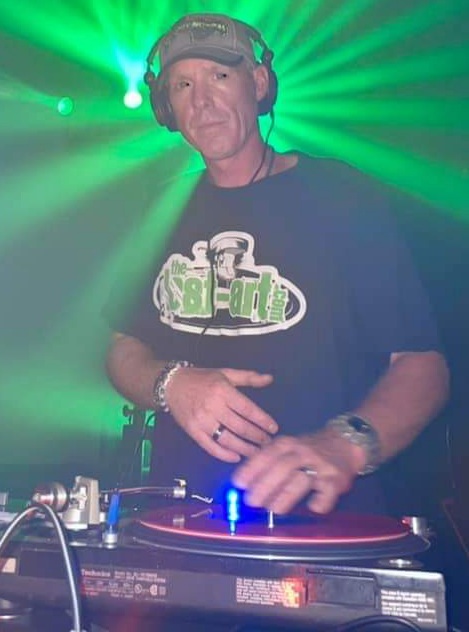
The Bend Scratch, pitch manipulation at its finest